
A Progression of Sensory-Friendly Performances in Pittsburgh, PA

Sensory-Friendly performances have become a relatively new tradition for many families in the Pittsburgh area. The venues offer a “relaxed” atmosphere that is calm and welcoming. The accessible performances emerged in 2013, and have continued to create lifelong memories for people with autism or sensory processing disorders ever since, and the Pittsburgh CLO has adopted the tradition with its sensory-friendly A Musical Christmas Carol.

Autism Connection spoke with Vanessa Braun from the Pittsburgh Cultural Trust and Lindsey Kaine from the Pittsburgh Ballet Theatre to learn the history of sensory-friendly performances in the Steel City, beginning with two groundbreaking features: The Lion King and The Nutcracker.

Autism Connection: How did the wonderful opportunity to bring sensory-friendly performances to Pittsburgh present itself?

Vanessa Braun: I first learned that the Theater Development Fund in New York City was making Broadway shows accessible to an audience on the spectrum through a piece on the national news. I went to work the next day and brought it up in a conversation with our Director and Assistant Director of Guest Services, telling them that this was happening in New York, and did they think that we could make a similar show happen in Pittsburgh. They then told me that The Lion King would be returning to Pittsburgh in 2013, and that they loved the idea and agreed with me that we were completely capable of bringing an autism-friendly or sensory friendly show to the Pittsburgh market.

“We started a trend and Pittsburgh, our region, has actually become a national leader in autism-friendly and sensory-friendly programming, which we’re pretty proud of and it’s impressive for a small city like ours.”  -Vanessa Braun


Autism Connection: What did your research entail?

Vanessa Braun: Three representatives from the Cultural Trust traveled to the Kennedy Center’s (LEAD) conference and attended a session about their work conceiving of and executing their two shows with Disney, The Lion King, and Mary Poppins. We also met with the Theater Development team at the conference. They invited us to New York to see their second Lion King show in action.

After our fact-finding trip, we really got into the fine details of making this show happen. We secured the date with the tour, and it was to be the third week of a four-week run. It was vital for us to choose a Saturday to appeal to as many families as possible. We also stayed connected with our friends at the Ballet. Their first show would take place in December of 2013, and we worked together on some outreach, and of course, took the lead on training our front of house staff who would later work their show.

“Our sensory-friendly performances are a step toward making the excitement and beauty of a ballet performance barrier-free, accessible and welcoming to everyone in our Pittsburgh community.” Pittsburgh Ballet Theatre


Autism Connection: What kind of organizational commitment did each of your organizations invest in these shows?

Vanessa Braun and Lindsey Kaine: For us it was first financial, even with a group discount on the entire house, we wrote Disney a 200,000 check to buy out every seat. Why, may you ask, do we buy out the house?  It is because we recognize that Broadway is an expensive endeavor. If you are coming to a typical show, you are paying $60-150 or more per ticket. Top tickets for Hamilton were going for $450 per ticket. We know that that is prohibitive for a family, and we know that parents of children on the spectrum, or who have other academic or sensory needs.

Autism Connection: Did you hold special trainings for staff and volunteers? Did you bring in outside experts?

Vanessa and Lindsey: Every volunteer and front of house staff member was specially selected to work our first show. Even with our high criteria we brought in our friend and expert, Lu Randall Executive Director of the Autism Connection to train our team. Everyone who was in the theater that day was trained by Lu. Over the past ten years she has continued to train our staff and volunteer core and she and her team have been invaluable to us.

Another group of people who we work with is the group of actors who are on stage. We like them to know a bit about our audience and differences that they may experience in timing or audience reaction. We explain that some laughs or applause breaks may differ from the typical show that they do night after night. We always get a great response from these cast meetings.


Autism Connection: For readers who may not have been to your performances, can you describe the differences and similarities to a typical performance that an audience member may see at one of your shows?

Vanessa and Lindsey: First, we have a team of outside professional volunteers, doctors, teachers, nurses, people who know the audience and who can help if needed. We spread them out throughout the venue. Then in the lobby we set up at least one quiet space and one activity space. In these areas, people can either stop in to blow off some steam or alternatively come to have a moment of calm.

In the theater itself, we have the lights up to about a quarter of their regular brightness, this is so that people can feel free to get up and down if they need to throughout the show. We have ushers and theater staff to hand out fidgets and share needed information. We allow personal snacks and communications devices that you would not see at a typical show.

Other than that, we want the experience to be regular with some supports, but regular. Production–what people see on the stage–is controlled by the touring show, but a few elements are softened or removed. So, the show takes out a bright flash of light or a sudden noise. The important thing is that the show stays true to itself.
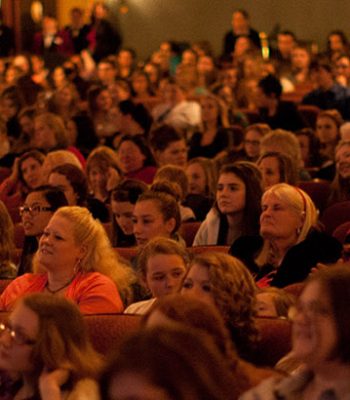
Photo of an audience enjoying a sensory friendly performance at the Benedum

Audience enjoying a sensory-friendly performance


Autism Connection: What do you have in mind for the future?

Vanessa Braun: In 2015 we started offering one sensory friendly show each year at the Children’s Theater Festival. We will continue that practice and keep an eye on the Broadway touring schedule. We look for shows out there that have broad based appeal, a show that will attract at least 2,000 community members, and a show that will be with us for three weeks or more. We love to bring Broadway to this new audience and are excited for the chance to do it again.
Family Division of the Allegheny County Courthouse Initiates Sensory-Friendly Areas

Autism Connection of Pennsylvania is thrilled to announce sensory-friendly areas in development at the Family Division of the Allegheny County Courthouse. We explored the facility with The Honorable Jennifer McCrady, the judge who initiated the project, who also took time to answer our questions about the importance of sensory-sensitive spaces.

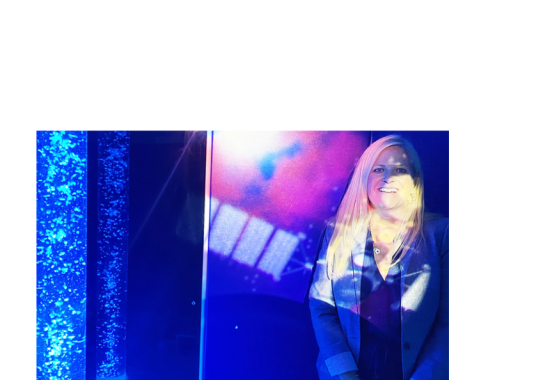
Photo of Judge McCrady in sensory room

Judge Jennifer McCrady stands in the Sensory Room in the Allegheny County Family Division Courthouse

Autism Connection: What prompted you to create the sensory-friendly areas?

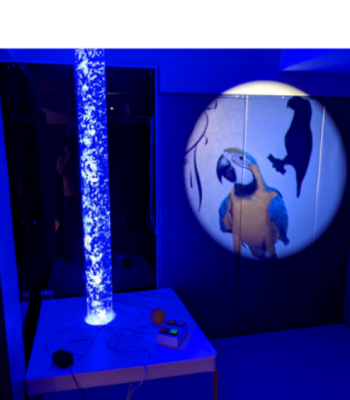
Judge McCrady: The Family Division is a chaotic environment and can be very overwhelming for members of the community to navigate. The majority of the individuals entering the building have experienced a trauma and may have any number of disabilities. We, as a court, needed to do better to recognize that the physical space was not conducive to the population that we serve. After input from stakeholders, youth, and families, the court partnered with Carnegie Mellon Human Centered Design class to revamp the space and communication. As part of the recommendations from CMU, it was clear that the court needed to make improvements for individuals with disabilities. The sensory room provides a quiet and calm space for an individual in a rather chaotic environment.

Using Physical Space to Create a Sense of Wellbeing

Autism Connection: Is physical space important to a person’s sense of wellbeing?

Judge McCrady: Yes, physical space is very important to a person’s wellbeing. The need for a calm, quiet, and safe space may be critical to helping the individual to successfully navigate the process. As a court and through the many improvements implemented, we are striving to be transparent, promote trustworthiness, and provide the public with a sense of empowerment as they navigate a stressful and hectic environment.

Photo of sensory room with dim blue lights and images of parrots projected on wall next to a bubble tube machine

Photo of sensory room in the Family Division of the Allegheny County Courthouse


Autism Connection: What is the first step others can take in creating similar environments?

Judge McCrady: Start small by providing fidget toys to youth, improve signage in the facility, train system players and frontline court employees on how to interact with members of the public in a trauma-informed way. The first encounter with a court employee can set the tone for the rest of the experience. Build toward creating sensory spaces and sensory areas. Improve docket management systems so there is less downtime as well as reasonable expectations for waiting time. Provide quiet and cleaning waiting spaces with access to vending machines and wi-fi service.

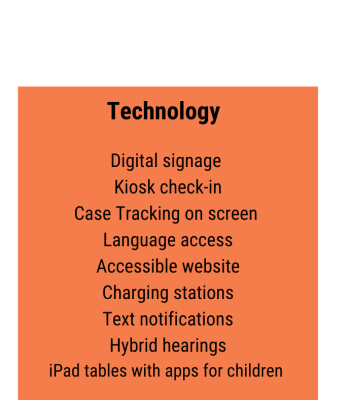
Technology: digital signage, kiosk check in, case tracking on screen, language access, charging stations, text notifications, hybrid hearings, iPads for children


Safe Family Resource Center and Wellness Clinic

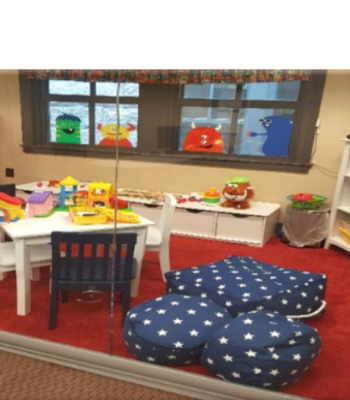
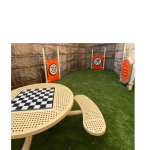
Private room with comfortable large pillows, play area, and table with chairls

Safe Family Resource Center: Confidential areas for victims of abuse. Self-contained, private, play space for children and youth with separate waiting and check-in areas for plaintiffs and defendants


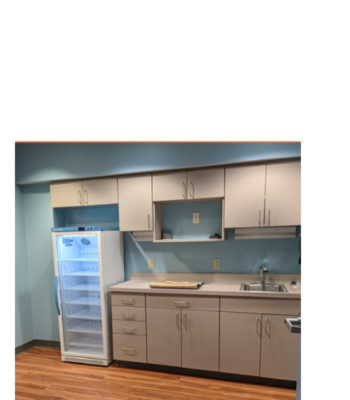
Wellness Clinic

Wellness Clinic:
Easy access in the Children’s Room staffed by Children’s Hospital professionals, and available for all children waiting for a hearing


Creating the Conditions for Sensory-Friendly, Trauma-Informed Spaces

Judge McCrady anticipates factors that can add to stress when visiting the courthouse. The project addresses these issues by creating safe spaces, using technology, and clear signage throughout the building. Visitors know where they need to be, and when. Details like charging stations Wi-Fi access can alleviate common concerns. The sensory room serves as a retreat where visitors have control of their surroundings.

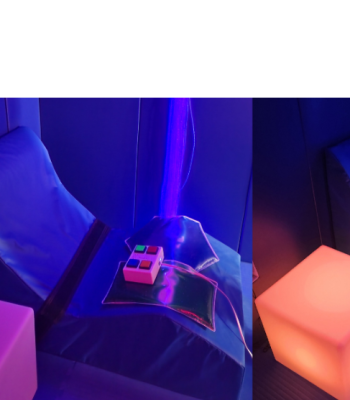
Seating with light controls in sensory room

Comfortable seating with light and sound control


Autism Connection: Do you see this work becoming standard practice?

Judge McCrady: We found that there are many foundations and funders who are interested in this type of project and willing to help offset costs. If not for the many foundations that we worked with, we would not have been able to accomplish this project. Our hope is that court systems recognize the impact that trauma can have on an individual, and how important it is for our public court spaces to provide the appropriate and necessary trauma-informed accommodations for those with disabilities. It is an attainable goal.


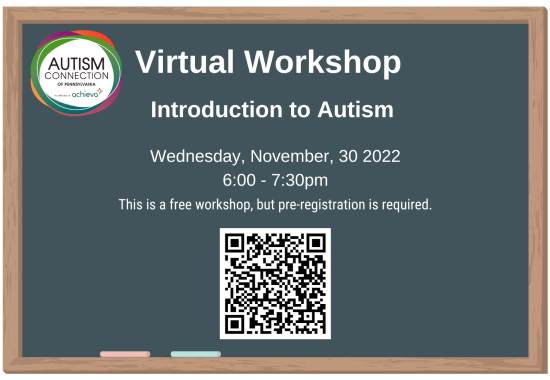
Introduction to Autism

Getting any new diagnosis comes with the need to understand it. Learn the basics about autism, and get some take-home tips, from people who understand and have worked in this field for 20+ years.

We will explain the details about autism and how brain differences help shape personality, likes, dislikes, fears, eating, sleeping, the senses, and communication. Please come and ask your questions, meet others with similar concerns and learn what to do at home and in the community!

This is a free workshop, but registration is required.


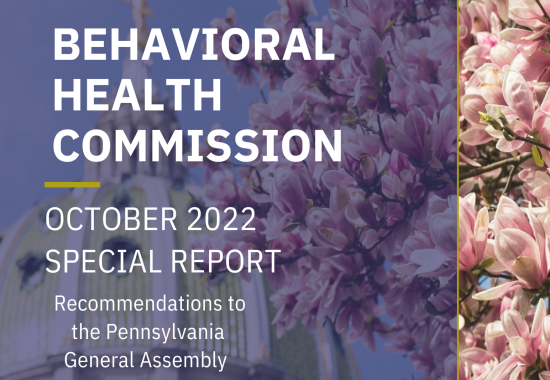
Behavioral Health Commission Special Report 2022

We are powered by an amazing board of trustees who actively engage in the work we need to in order to be a lifeline for families and adults, which is our mission. One of our unsung heroes is the Hon. William F. Ward (Bill) who serves on the Pennsylvania Commission on Crime and Delinquency (PCCD). As PCCD’s representative, Bill was key in creating funding opportunities in this Behavioral Health Commission Special Report. Follow the link below to read the full report.

Behavioral-Health-Commission-Report

Act 54 Areas of Focus (page 3)

  • Delivery of services using telemedicine
  • Behavioral health rates, network adequacy, and mental health payment parity
  • Workforce development and retention
  • Expansion of certified peer support specialist services and peer-run services
  • Development and provision of crisis services
  • Integration of behavioral health and substance use disorder treatment
  • Cultural competencies when providing behavioral health care
  • Impact of social determinants of health on behavioral health
  • Intersection of behavioral health and the criminal justice system
  • Establishment of an integrated care model that can deliver timely psychiatric care in a primary care setting

On page 7, the Commission recommends that we “develop and expand upon pre-arrest diversion programs that connect people with resources in a time of crisis, including individuals with intellectual disabilities and with autism spectrum disorder.”

Bill Ward took a few moments to answer some clarifying questions about the recommendations:

Bill Ward

Bill Ward, Past Chair, Autism Connection of PA Board of Trustees

Autism Connection: What does “pre-arrest” actually mean?

Bill Ward: There are two different types of arrests. There is a custodial arrest, which is when a person is detained, is not free to leave the scene, placed in handcuffs, and removed to the local police department. (There are also non-custodial arrests, such as when a person is given a citation or ticket for a summary offense but is allowed to leave the scene without being processed at the local police department.)  The concept of “pre-arrest” is focused upon those encounters or incidents where the police have the discretion to not detain and charge a person, but instead would “divert” them from being criminally charged.  In my mind, “pre-arrest” is too narrow a restriction.  More often, the police will detain and charge a person.  Even so, much good work can be done to divert the offender after the arrest but prior to the Preliminary Hearing, usually set for 10 days later.

Autism Connection: Can you give us a brief description of the co-responder model? Is there a good resource for this model?

Bill Ward: One definition is: “A model for crisis response that pairs trained police officers with mental health professionals to respond to incidents involving individuals experiencing behavioral health crises.”  Here’s a link to an article discussing the co-responder model:

Responding to Individuals in Behavioral Health Crisis Via Co-Responder Models

The BHC Report recommends that $5 million be dedicated to counties to develop or expand co-responder models, and to train first responders in crisis intervention.

Autism Connection: Anything you’d like to add?

Bill Ward:  Yes. While $23.5 million is recommended to improve the criminal justice and public safety systems, $5 million (of the $23.5 million) will be to develop and expand upon pre-arrest diversion programs that connect people with resources in a time of crisis. The Behavioral Health Commission was receptive to put in that such funding expressly include “individuals with Intellectual Disabilities and with Autism Spectrum Disorder.”


Autism Connection of Pennsylvania recognizes the tireless dedication our Board of Trustees demonstrates. When you see something that speaks to your need, know that our awesome board has had their fingerprints on that – for our literal minded readers, this means they have inspired, worked on, or supported that activity in a meaningful way.


Empowered Voices Leadership Meeting Series

The Empowered Voices Leadership Group is comprised of self advocates
who are interested in meeting new people, sharing their
stories, and developing self-advocacy and leadership skills. Members of
the group plan the meeting agendas, speakers, and outreach activities.
The group meets on the 1st and 3rd Thursday of every month via
Google Meets from 6pm to 8pm ET. Topics include Person-Centered
Planning, Self-Advocacy Skills, and Public Speaking.

This week’s topic is Healthy Eating.

Google Meets Joining Information:
Video call link: https://meet.google.com/iuu-miaf-wio
Or dial: (US) +1 304-908-9025 PIN: 199 210 961 #
For more information contact Melissa Skiffen at mskiffen@achieva.info
or visit www.achieva.info


Gingerbread Man Running Company’s Labor Day Run for Autism Connection

We met up with some friends from the Gingerbread Man Running Company, who so generously donate proceeds from their annual half marathon to support you, the autism community in PA.

Distance events – the rolling, swimming, bike, or running kinds – and autism may have more in common than you might imagine. They require practice, repetition, a slow building of endurance and technique to accomplish things over time. Sometimes we fall, get a sprain, strain, become overheated or freezing cold. We can be out on a course when suddenly it starts lightning – and we need to tap into adrenaline and get to shelter as fast as possible. Sometimes we misjudge the depth of a puddle, catch a wave in our face, or slip on painted lines or ice we cannot see.

Photo of Anna, organizer announcing the beginning of the race with man in gingerbread costume excitedly waving his arms behind her

The race begins with Gingerbread Man’s support

Back to Labor Day 2022 – we turned out before dawn to see what we as volunteers needed to do, set up camp at the start/finish line, chatted up the Gingerbread Man himself along with his coworkers, and got ready to greet and cheer runners in their various distance races. At around 90 minutes in, we got ready to hand out medals to finishers, and counted how many people were left on the course when we were down to about ten. The bike guide finally rode up and let us know “there’s the party group and one person left.” We got the right number of water bottles and a medal ready to hand out to them. I wondered what “the party group” was – maybe some new kind of birthday tradition?

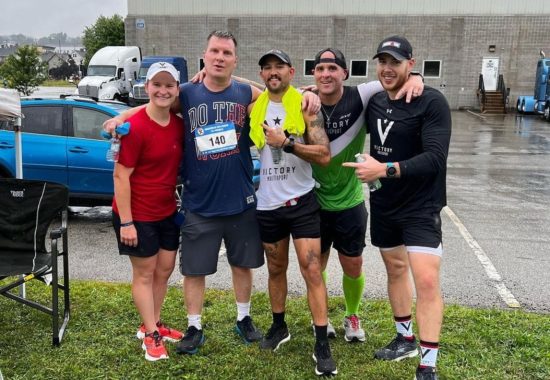
What we didn’t know is that the “party” was a group from Victory Multisport who came out to the race just to run the Half with the intent of supporting the last person running. They joined him along the way, and got to know his story. They just kept him going.

That’s it.

No major advice, no drama, no big deal was made, but by providing companionship, encouragement, and listening to his personal motivations and life experience, they got him over the finish line in fine form.

Photo of a smiling man wearing a white hat on a bicycle

The Bike Guy

Lots of people live with disability and grind it out, one step or one roll at a time, like the half marathoner. They do this if they are the person disabled by society’s barriers, or if they are a loved one trying to help out, possibly with the majority of care responsibilities. Like a distance athlete, they may have coaches or observers yelling advice, saying things like “You Got This!” or “God knew what he was doing…” and other things which may or may not be helpful at times of worry, stress, or downright despair when we feel like quitting.

Distance athletes sometimes think “I can’t do this anymore – how can I slow down, pace myself, or just quietly stop – will anyone see me? Judge me?  Will I judge myself?  Am I a quitter?” Often, they just put mind over matter and make strides to move past that next pebble, landmark, or tree they see ahead.  And they get where they are going, experiencing some success, often with pain or exhaustion as their main companions.

There’s nothing heroic about living a disability life. It is what it is – not a choice, not a game, not an action movie, but a fact of life. There are certainly no medals being handed out. If we are in more of a spectator role, how can we provide water, practical encouragement, and physical or emotional support to those who are grinding it out?

Using the distance athlete metaphor – some want to be left alone to focus, some look up and smile when there are cheers, everyone needs the water, and lots of people need nutrition without even realizing how low their resources have gotten.

The “party group” was super cool to show up and support a complete stranger. If you find yourself in a support role, think about the value of doing concrete things like dropping off a lasagna, or helping with yard, shopping, or household chores. The last runner stuck it out and finished with confidence and style, accepting the help that was offered and made it easier.

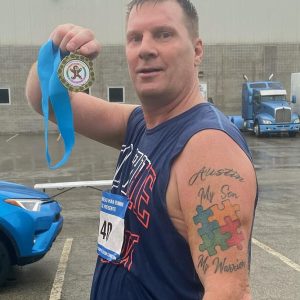
Successfully Determined Runner holds his medal after crossing the finish line

Successfully Determined Runner

If you have a disability, or are a caregiver with needs, are you able to accept support that’s offered and to be specific about telling people what you need? Maybe you have done this and been let down; maybe it worked and it got you closer to a goal you needed to reach. Or maybe, you helped someone else cross their own finish line when you reached out for help.