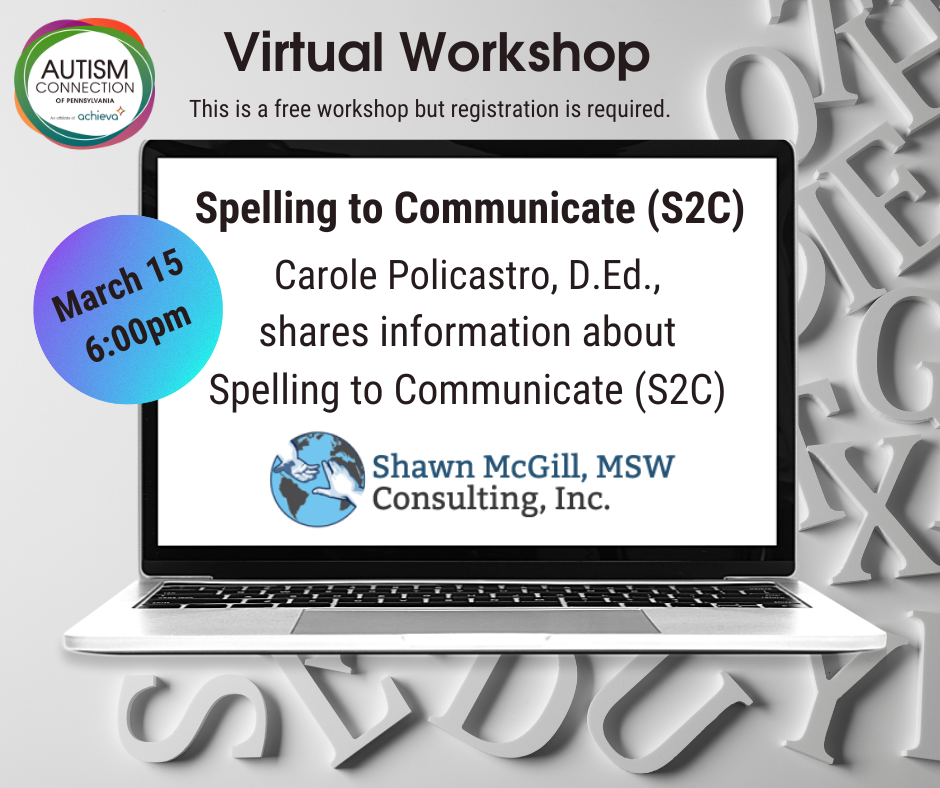
Getting any new diagnosis comes with the need to understand it. Learn the basics about autism, and get some take-home tips, from people who understand and have worked in this field for 20+ years.
We will explain the details about autism and how brain differences help shape personality, likes, dislikes, fears, eating, sleeping, the senses, and communication. Please come and ask your questions, meet others with similar concerns and learn what to do at home and in the community!
This is a free workshop, but registration is required.
Autism Connection of Pennsylvania is excited join the celebration of sthe 15th year of the DICK’S Sporting Goods Pittsburgh Marathon in 2023! The Pittsburgh Marathon was held annually from 1985-2003, and following a five-year hiatus, the DICK’S Sporting Goods Pittsburgh Marathon was relaunched in 2009 and debuted with a sold-out field. Show your support for Autism Connection at the 15th running of this awesome event this May!
Join expert Miniature Railroad educators on a special behind-the-scenes tour through one of the Carnegie Science Center’s most popular exhibits! All tours will occur outside of regular museum hours. Designed for visitors with sensory sensitivities and/or other disabilities, these tours are personalized and free of crowds and loud noises. Each tour date has a very limited number of spots available, to maintain a welcoming, low-stimuli environment.
Tickets for this opportunity are free, regardless of Membership status, but require advance reservations for all members of your party. This is an all-ages appropriate event. General admission to the museum is not included, but can be purchased separately for the Tours that occur before museum open. To register, please use the buttons below, call 412-237-3400 or email CustomerService@CarnegieScieneCenter.org
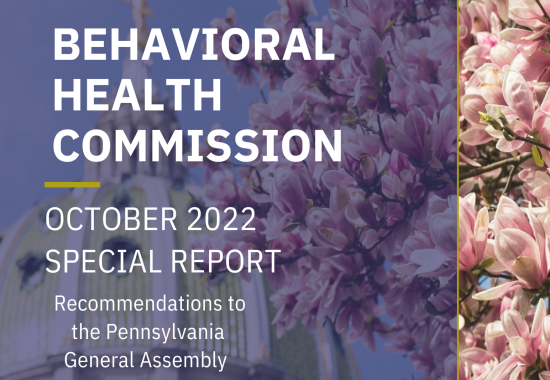
We are powered by an amazing board of trustees who actively engage in the work we need to in order to be a lifeline for families and adults, which is our mission. One of our unsung heroes is the Hon. William F. Ward (Bill) who serves on the Pennsylvania Commission on Crime and Delinquency (PCCD). As PCCD’s representative, Bill was key in creating funding opportunities in this Behavioral Health Commission Special Report. Follow the link below to read the full report.
Behavioral health rates, network adequacy, and mental health payment parity
Workforce development and retention
Expansion of certified peer support specialist services and peer-run services
Development and provision of crisis services
Integration of behavioral health and substance use disorder treatment
Cultural competencies when providing behavioral health care
Impact of social determinants of health on behavioral health
Intersection of behavioral health and the criminal justice system
Establishment of an integrated care model that can deliver timely psychiatric care in a primary care setting
On page 7, the Commission recommends that we “develop and expand upon pre-arrest diversion programs that connect people with resources in a time of crisis, including individuals with intellectual disabilities and with autism spectrum disorder.”
Bill Ward took a few moments to answer some clarifying questions about the recommendations:
Bill Ward, Past Chair, Autism Connection of PA Board of Trustees
Autism Connection: What does “pre-arrest” actually mean?
Bill Ward: There are two different types of arrests. There is a custodial arrest, which is when a person is detained, is not free to leave the scene, placed in handcuffs, and removed to the local police department. (There are also non-custodial arrests, such as when a person is given a citation or ticket for a summary offense but is allowed to leave the scene without being processed at the local police department.) The concept of “pre-arrest” is focused upon those encounters or incidents where the police have the discretion to not detain and charge a person, but instead would “divert” them from being criminally charged. In my mind, “pre-arrest” is too narrow a restriction. More often, the police will detain and charge a person. Even so, much good work can be done to divert the offender after the arrest but prior to the Preliminary Hearing, usually set for 10 days later.
Autism Connection: Can you give us a brief description of the co-responder model? Is there a good resource for this model?
Bill Ward: One definition is: “A model for crisis response that pairs trained police officers with mental health professionals to respond to incidents involving individuals experiencing behavioral health crises.” Here’s a link to an article discussing the co-responder model:
The BHC Report recommends that $5 million be dedicated to counties to develop or expand co-responder models, and to train first responders in crisis intervention.
Autism Connection: Anything you’d like to add?
Bill Ward: Yes. While $23.5 million is recommended to improve the criminal justice and public safety systems, $5 million (of the $23.5 million) will be to develop and expand upon pre-arrest diversion programs that connect people with resources in a time of crisis. The Behavioral Health Commission was receptive to put in that such funding expressly include “individuals with Intellectual Disabilities and with Autism Spectrum Disorder.”
Autism Connection of Pennsylvania recognizes the tireless dedication our Board of Trustees demonstrates. When you see something that speaks to your need, know that our awesome board has had their fingerprints on that – for our literal minded readers, this means they have inspired, worked on, or supported that activity in a meaningful way.
Many children experience anxiety when it is time to go back to school. For kids with an autism spectrum disorder this can be especially true. Families can make this transition easier by doing a few simple things to decrease the worries and fears associated with the return to school.
Parents and caregivers can reduce a child’s “back to school” anxiety by using the following techniques:
Mark on the family calendar when the first day of school will be so the child is aware of the upcoming change.
Begin to structure the day so that it is similar to the child’s school day. No staying up late or sleeping in.
Have the child engage in meaningful activities that relate to their favorite academic subjects instead of watching television or playing video games.
Plan a visit to the child’s school. This is a wonderful way for the child to see their classroom, meet their teachers, and even get an idea of what their schedule will look like when classes begin.
Talk about positive things associated with school such as learning innovative ideas, seeing peers, and creating new friendships.
Practice with children reciprocal conversation skills so they can feel confident talking to classmates they have not seen in several months.
Point out to children who worry about changes all the things that are still the same in their life, from the smallest to the biggest detail. This technique can be really helpful in reducing anxiety.
Plan a “back to school “celebration by having a special dinner or by making a favorite dessert. This is wonderful “pairing” approach to change a child’s attitude from fear and worry to one of positive expectations and excitement for the coming school year.
Using these strategies is likely to make the process of returning to school a much more positive experience that can be enjoyed by all. For more information, please contact us at Sdean@Deanbehavioral.com
Sally Dean, Dean Behavioral Consulting, LLC
Manage Consent
To provide the best experiences, we use technologies like cookies to store and/or access device information. Consenting to these technologies will allow us to process data such as browsing behavior or unique IDs on this site. Not consenting or withdrawing consent, may adversely affect certain features and functions.
Functional
Always active
The technical storage or access is strictly necessary for the legitimate purpose of enabling the use of a specific service explicitly requested by the subscriber or user, or for the sole purpose of carrying out the transmission of a communication over an electronic communications network.
Preferences
The technical storage or access is necessary for the legitimate purpose of storing preferences that are not requested by the subscriber or user.
Statistics
The technical storage or access that is used exclusively for statistical purposes.The technical storage or access that is used exclusively for anonymous statistical purposes. Without a subpoena, voluntary compliance on the part of your Internet Service Provider, or additional records from a third party, information stored or retrieved for this purpose alone cannot usually be used to identify you.
Marketing
The technical storage or access is required to create user profiles to send advertising, or to track the user on a website or across several websites for similar marketing purposes.