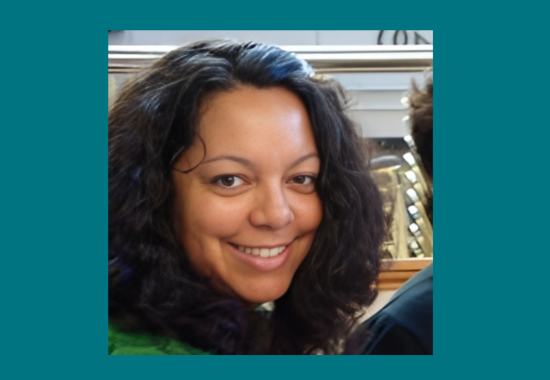
Autism Connection of Pennsylvania is thrilled to be chatting with Ayana Singh, a high school freshman who’s already making an impressive impact in the world of science and advocacy. In 2024, she created a well-being and sensory journal for caregivers and people with autism spectrum disorder (ASD) to track progress and day-to-day life online. This year, she created a machine learning model that uses functional magnetic resonance imaging (fMRI) scans to predict autism severity.
Both projects were presented at the Carnegie Science Center as part of the Pittsburgh Regional Science and Engineering Fair (PRSEF), winning notable awards from the U.S. Naval Research Office, Pittsburgh Intellectual Property Law Association, and more.
Inspired by her close family ties to autism, she’s passionate about using technology to make a real difference. We’re excited to hear about her journey, what drives her, and what’s next on her incredible path.

Ayana standing next to her science fair project
Background and Inspiration
What first inspired you to begin researching autism and sensory well-being at such a young age?
What first inspired me to begin researching autism and sensory well-being at such a young age was a deeply personal experience within my own family. My sister and my cousin are the same age, and when they were around 2.5 years old, we began noticing clear differences in their development—differences that raised questions none of us had answers to at the time. Eventually, my cousin was diagnosed with autism in India, but even after the diagnosis, my family struggled to access consistent therapy and support.
Witnessing this made me realize how much of a gap there is in autism awareness, diagnosis, and sensory support systems in many parts of the world, especially compared to the research and resources available in the U.S. That contrast motivated me to dig deeper, and to explore how I could use science, data, and innovation to help families like mine better understand autism and support neurodivergent individuals more effectively. It became more than research, and a personal mission.
How have your personal experiences with family members on the autism spectrum influenced your research?
My personal experiences with family members on the autism spectrum have been the foundation of my interest in this field. Last summer, I had the opportunity to teach piano to a young girl on the spectrum who was the same age as my sister and cousin. That experience was eye-opening. I saw firsthand how deeply she connected with music, how it calmed her and how she seemed to process it in a completely unique way. It made me realize that there are so many dimensions to autism that are still not fully understood. That moment really deepened my curiosity and inspired me to explore different aspects and potential markers of ASD through research.
What drew you to the intersection of neuroscience and machine learning for your project?
What drew me to the intersection of neuroscience and machine learning was a gradual but deeply personal journey. My first project related to autism focused on developing a software program that tracked sensory well-being. It was my personal response to the challenges my family faced in trying to understand and support the unique sensory needs of my cousin, who is on the autism spectrum.
As I learned more, my curiosity expanded to the possibility of early detection—how powerful it could be for families to receive timely support. That led to my second project, which explored how technology, particularly machine learning, could be used to identify early markers of ASD in a way that’s accessible and scalable across different regions, including countries like India where resources are limited. This naturally brought me to neuroscience and neuroimaging data, where machine learning can help uncover patterns that might otherwise go unnoticed. It felt like the perfect intersection of science, empathy, and innovation.
Research and Development
Could you walk us through your project — how does your machine learning model use fMRI scans to predict autism severity?
My project focuses on using fMRI data and machine learning to predict autism severity, offering a neurobiological alternative to current tools like ADOS and ADI-R, which don’t reflect brain-based changes over time. EEG and eye-tracking studies have tried to address this gap, but they can be uncomfortable for autistic individuals. I aimed to build a non-invasive, adaptable model grounded in brain function.
I used data from ABIDE II, the most recent publicly available ASD dataset. After preprocessing the fMRI scans in Python [programming language], applying brain masks and extracting BOLD signals, I segmented each participant’s brain into clusters using K-Means, grouping brain voxels [three-dimensional representation of brain tissue] based on signal similarity. This helped me analyze whether certain brain regions contribute to autism traits.
Next, I selected key clinical and imaging features such as age, IQ, and BOLD-based brain clusters, and input them into a Random Forest model, chosen for its ability to handle complex data and prevent overfitting. I optimized the model and used feature importance analysis to evaluate which inputs best predicted the ADOS-2 total severity score. My model achieved 87% accuracy (R²), which is high compared to existing studies. In the long term, this model could allow updated, scan-based severity assessments across the lifespan, addressing how autism manifests differently over time, while staying non-invasive and clinically useful.
What were some of the biggest challenges you faced while developing your model?
The biggest challenge which I experienced was preprocessing the fMRI scans which means removing excess noise and clutter from the scans. I had difficulty because I had never done it before, and there were few easy-to-understand resources online. To overcome it, I tried various methods such as employing different python tools and researching implementation.
How did you learn the technical skills necessary to work with machine learning and fMRI data while still in middle school?
I have been learning how to code ever since I was in fifth grade. My first introduction to programming was from mentors at the nonprofit Steel City Codes, which I am now a part of and have decided to give back as a mentor myself.
Was there a specific moment during your research when you realized you were onto something exciting?
The first moment of amazement was definitely seeing the fMRI scans. Afterwards, when I was visualizing the results of the model in scatter plots and different types of charts, I felt hope that the project was moving in the right direction and progress was being made.

An fMRI scan from Ayana’s project
Recognition and Impact
How did it feel to have your work recognized by the Carnegie Science Center?
Since I am still a high schooler, one of the places I can bring my project and get people’s attention on this topic is the Carnegie Science Center. I really am thankful to the PRSEF who gives us this platform to share and talk to experts, judges, and sponsors with similar experiences and research.
What does it mean to you to have your work shared with organizations like the Autism Connection of Pennsylvania?
It means a lot to have my work shared with organizations like the Autism Connection of Pennsylvania. It inspires me to engage with organizations and nonprofits that share a common goal of improving the lives of people with ASD. Knowing that my research aligns with their mission gives me hope that, together, we can create a future where people with autism have access to better support, understanding, and resources.
How do you hope your research will contribute to better treatment planning for autistic people?
I hope my research will lead to more personalized and up-to-date treatment plans by providing a non-invasive, brain-based way to assess autism severity, helping clinicians track changes over time and tailor therapies more effectively.

Leveraging fMRI and Machine Learning to Analyze Gender Disparities in ASD Severity Prediction
Personal Insights
Many students your age are just beginning to explore science. What advice would you give to young researchers who want to take on ambitious projects?
My advice is to start with a question or topic that genuinely means something to you, even if it feels big. Break it into smaller steps, be curious, and don’t be afraid to learn things as you go. Ask for help, learn, and don’t give up on your project(s).
How do you balance your academic work with your independent research projects?
My weekends are devoted to research and any other extracurriculars. Whenever I have time on the weekdays, I am excited to work on researching and learning more.
What has been the most rewarding part of your research journey so far?
The most rewarding part of my research journey has been seeing everything come together, the model actually working, the data making sense, and the results matching what I hoped to find. But even more than that, sharing it with others whether in presentations or papers, and seeing people understand and care about the impact has been incredibly fulfilling.
Future Plans
Are there any next steps or new ideas you’re excited to explore based on your current project?
I want to finish writing my research paper and eventually turn my model into a publicly accessible tool. My goal is to make it available in under-resourced regions, including countries like India, where support for people with autism is often more limited compared to places like the United States.
Looking ahead, do you envision a career combining technology, medicine, and advocacy for neurodivergent people?
In the future, I aspire to become a neurologist, where I can combine research with clinical work. I hope to focus on developing innovative technologies that improve the diagnosis and treatment of neurodivergent people, while also advocating for better support and awareness in underrepresented communities.
Reflection
What is one lesson you’ve learned through this experience that you will carry with you in your future work?
One lesson I’ve learned is the importance of persistence as research doesn’t always go as planned, and being adaptable is crucial. Many aspects of my project didn’t go as expected, and I found myself stuck at certain steps or facing unexpected issues. There
were times when I wanted to quit due to these challenges, but if I hadn’t pushed through, I wouldn’t have reached my end product or successfully completed the project.
How has this research experience changed how you view science, medicine, or advocacy?
My research experience has shown me that science is more than just experimenting in my school chemistry lab. If I did not explore the world of science more, I would not have stumbled upon fMRI and discovered how it connects with ASD. As for advocacy in medicine, I have learnt how important it is to ensure that people, especially those in underserved communities, have access to the tools, support, and treatments they need.