From Awareness to Action
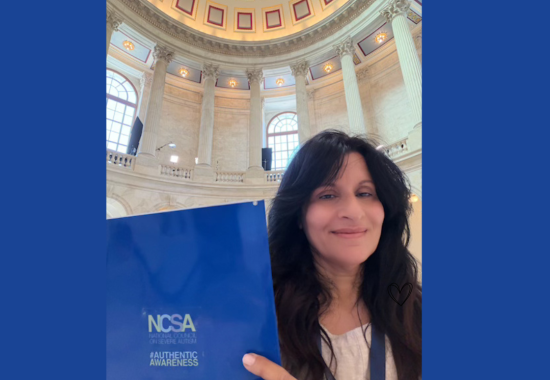
Walking into the National Council on Severe Autism’s 2026 Authentic Awareness Autism Assembly, I immediately sensed this conference was different. Parents, family caregivers, researchers, advocates, clinicians and nonprofit leaders had gathered with a shared purpose: improving the lives of people with severe and profound autism. Many parents attended alongside their children or adult children, making the Assembly itself a reflection of the community it was designed to serve.
I attended on behalf of Autism Connection of Pennsylvania, but I also came as a parent. Although it was my first NCSA Assembly, it quickly became clear why so many families return each year. The conversations were honest, respectful, and grounded in lived experience. Rather than discussing individuals with severe autism from a distance, the conference centered on their daily lives and the families who support them.
As I listened, I found myself thinking about the conversations we have every day with Pennsylvania families. Questions about housing, adult services, staffing shortages, crisis response, healthcare, and future planning weren’t simply conference topics. They were the same challenges families bring to Autism Connection of Pennsylvania every week. The Assembly reinforced that these concerns are shared by families across the country.
Throughout the conference, one phrase appeared again and again: Authentic Awareness. It challenged participants to move beyond simply recognizing autism and instead ask a more meaningful question: What does authentic awareness require if we truly want to improve people’s lives?
Three themes emerged throughout the Assembly.
The first was recognition. People with severe and profound autism, along with the family members who often support them for decades, deserve to be fully represented in research, healthcare, public policy, and national conversations about autism.
The second was policy. Families understand where systems succeed and where they fall short because they navigate those systems every day. Speakers emphasized that effective public policy should be informed not only by research and professional expertise but also by lived experience.
Finally, there were solutions. Discussions focused on strengthening the direct support workforce, expanding housing opportunities, improving crisis services, collecting better data, and ensuring meaningful supports remain available throughout a person’s lifetime.
The Assembly reflected that progression. The first day focused on learning through presentations on research, Medicaid, workforce challenges, caregiver well-being, supported living, and advocacy training. The second day shifted from learning to action as participants traveled to Capitol Hill to meet with members of Congress and their staff. In addition to the two-day Assembly, participants took part in two two-hour virtual training sessions beforehand to prepare for congressional visits, followed by a 90-minute post-Assembly Zoom meeting to share experiences, report on Hill visits, and discuss next steps for ongoing advocacy.
For me, one presentation stood out above the rest. It didn’t introduce a new treatment or announce a major legislative victory. Instead, it focused on something equally important: the experiences of family caregivers.
Listening to Families: What the Caregiver Survey Revealed
One of the Assembly’s most compelling presentations highlighted findings from the National Council on Severe Autism’s 2025 Family Caregiver Survey, developed through NCSA’s Voices for the Voiceless legislative initiative. Conducted during August and September 2025, the survey gathered responses from 1,289 parents and caregivers representing all 50 states and Washington, D.C., providing one of the clearest national snapshots of life for families supporting loved ones with severe autism.
The findings echoed what many families already know from experience.
Most caregivers are in midlife, with nearly two-thirds between the ages of 45 and 64. Many are balancing careers, their own health, aging parents, and the lifelong responsibility of caring for a son or daughter with significant support needs. The survey underscored the importance of beginning future planning early, while parents can still help shape decisions about housing, services, and long-term care.
Housing and staffing emerged as two of the greatest concerns. Nearly 74% of individuals represented in the survey still lived at home with family, reflecting both the extraordinary commitment of caregivers and the limited availability of long-term housing options. At the same time, only 21% of respondents reported having reliable in-home staffing. Even when Medicaid services are approved, many families cannot access them because qualified direct support professionals simply are not available.
The survey also revealed the challenges families face during times of crisis. Nearly 63% reported that their loved one had experienced a behavioral or psychiatric crisis, yet many struggled to find emergency services equipped to meet the needs of individuals with severe autism. Traditional emergency settings are often not designed for autism-related communication differences, sensory needs, or complex behavioral presentations.
Perhaps the most striking finding was that 79% of caregivers had been told their loved one was “too severe” or “not a good fit” for a program or service. For many families, the greatest obstacle is not a lack of determination but a shortage of programs prepared to support people with the most challenging needs.
Future planning presented another sobering reality. Only 12% of caregivers reported having a concrete long-term care plan for their loved one. Presenters emphasized that this reflects more than personal planning. It also reflects the limited housing, staffing, funding, and service options available to families trying to prepare for the future.
More than anything, the survey reinforced why caregiver voices matter. Reliable national data helps policymakers understand not only how many families are providing care, but also the challenges they face every day. For me, the findings were deeply familiar. They mirrored the questions we hear regularly from Pennsylvania families and reinforced that these are national challenges deserving thoughtful attention from researchers, service providers, and policymakers alike.
The survey didn’t simply document problems. It helped explain why so many of the Assembly’s policy discussions focused on strengthening the systems families rely on every day.
Understanding the Policy Conversations
One of the Assembly’s most important messages was that policy is about far more than legislation. It shapes the services families can access, the support available in their communities, and the options they have as they plan for the future. Throughout the conference, speakers connected complex policy discussions with the everyday realities families experience.
A recurring theme was the importance of understanding acuity, or the intensity of an individual’s support needs. Two people may share an autism diagnosis while requiring very different levels of support for communication, daily living, behavior, medical care, or supervision. Speakers emphasized that collecting better data about those differences is essential if policymakers hope to direct resources where they are needed most.
Home and Community-Based Services (HCBS) also received significant attention. These Medicaid-funded supports help people with disabilities live and participate in their communities through services such as personal care, respite, behavioral supports, employment assistance, and community participation. Yet families often face another reality: services may exist on paper but remain difficult to access because providers lack the staffing or specialized training needed to support people with complex needs.
That challenge led to one of the conference’s central themes: the direct support workforce. Families may qualify for services, but without enough trained professionals, those services cannot become reality. Speakers stressed that strengthening this workforce requires competitive wages, specialized training, professional recognition, and long-term investment in recruiting and retaining experienced staff.
Another proposal focused on family caregivers themselves. Rather than creating a new federal program, the National Council on Severe Autism encouraged Congress to dedicate approximately $5 million of existing Autism CARES Act funding toward a comprehensive national study of family caregivers supporting people with severe autism.
Modeled after research conducted by the Elizabeth Dole Foundation on military caregivers, the proposed study would examine caregiver health, workforce participation, financial impact, long-term planning, access to services, and the specialized care families provide every day. Organizers emphasized that better information can lead to better decisions by helping policymakers understand where supports are working and where significant gaps remain.
One message stayed with me throughout these discussions: meaningful policy begins with meaningful information. Better data alone cannot solve every challenge, but it provides a stronger foundation for building services that reflect the realities families face every day.
From Conference Room to Capitol Hill
The Assembly’s second day transformed learning into action.
After spending the first day exploring research, policy, and advocacy, participants traveled to Capitol Hill to meet with members of Congress and their staff. The goal was simple: bring the experiences of people with severe autism and their families directly to the people helping shape public policy.
My first meeting was with staff from Senator John Fetterman’s office. I attended alongside Amy S. F. Lutz, Vice President of the National Council on Severe Autism. Amy shared the story of her son while I shared Eva’s story. Although our families’ experiences are different, both reflected many of the same themes discussed throughout the Assembly: the importance of dependable services, long-term planning, a strong direct support workforce, and ensuring meaningful supports continue throughout adulthood.
Sharing Eva’s story allowed me to speak not only as a representative of Autism Connection of Pennsylvania but also as a parent. For a few moments, statistics gave way to a daughter’s story, reminding all of us why those policies matter in the first place. The conversation became more than a discussion about services. It became a conversation about a real person, her daily life, her strengths, and the supports that allow her to participate in her community. The staff listened carefully, asked thoughtful questions, and created a genuine dialogue.
Later, I met with staff from Congressman Chris Deluzio’s office, where I again shared Eva’s story alongside the experiences of families who contact Autism Connection of Pennsylvania every day. Families reach out with questions about diagnoses, education, adult services, housing, respite, benefits, and future planning. The concerns discussed in Washington mirror the conversations taking place here in Pennsylvania.
Those meetings reinforced one of the Assembly’s most important lessons: research and personal stories are most effective when shared together. Data helps policymakers understand the scope of an issue, while families help them understand what those numbers mean in everyday life. Together, they create a stronger foundation for informed public policy.
Looking Ahead
Leaving Washington, I found myself thinking less about individual presentations and more about the people behind them.
I thought about parents asking difficult questions about their children’s futures, researchers working to better understand severe autism, professionals striving to improve services, and individuals with severe autism whose lives should remain at the center of every conversation.
The questions raised throughout the Assembly were the same ones we hear every day at Autism Connection of Pennsylvania.
- How do I prepare my son or daughter for adulthood?
- Where can I find qualified support staff?
- What happens during a crisis?
- How do we plan for housing?
- Who will care for my loved one when I no longer can?
The Assembly didn’t pretend there were easy answers. Instead, it brought together families, researchers, clinicians, advocates, policymakers, and community organizations with a shared commitment to improving the lives of individuals with severe autism.
As I traveled home from Washington, I kept thinking about how closely the national conversations mirrored the questions we hear every day at Autism Connection of Pennsylvania. Decisions made in Washington shape the services available in our communities, while the experiences of local families help shape those national conversations. That connection reminds me why our work matters: helping autistic people of all ages, families, educators, and professionals find reliable information, practical resources, and the next step forward.
I am grateful to the National Council on Severe Autism for creating an Assembly that challenged participants not only to learn, but to act. As a first-time attendee, I left with a deeper appreciation for the power of bringing research, professional expertise, and lived experience together.
For me, that is what Authentic Awareness truly means. It is more than understanding autism. It is listening to families, learning from lived experience, and turning that understanding into action so individuals with severe autism, including my daughter Eva, have the opportunity to live safe, meaningful, and fulfilling lives.