Autism Safety Expo 2025

Autism Connection of PA is excited to announce our upcoming Autism Safety Expo in concert with Jefferson Health’s Center for Autism and Neurodiversity, Philadelphia.  The Expo will unite families, caregivers, professionals, and community members to promote safety awareness related to autism and co-occurring conditions on Friday October 17th from 9-4, and Saturday the 18th from 9-noon at Monroeville Volunteer Fire Company #4, 4370 Northern Pike, Monroeville, PA 15146.   Your participation in this event will help make it an important “one stop shop” for people dealing with disability challenges, who are in need of safety and caregiving supplies, technology, and information!

There is no fee nor registration required for the community.

Sponsor and Event Table opportunities are available. 

Click here for Sponsorship

Click here for Event Table

Email development@autismofpa.org for more information.


Autism Safety Expo 2025

Autism Connection of PA is excited to announce our upcoming Autism Safety Expo in concert with Jefferson Health’s Center for Autism and Neurodiversity, Philadelphia.  The Expo will unite families, caregivers, professionals, and community members to promote safety awareness related to autism and co-occurring conditions on Friday October 17th from 9-4, and Saturday the 18th from 9-noon at Monroeville Volunteer Fire Company #4, 4370 Northern Pike, Monroeville, PA 15146.   Your participation in this event will help make it an important “one stop shop” for people dealing with disability challenges, who are in need of safety and caregiving supplies, technology, and information!

There is no fee nor registration required for the community.

Sponsor and Event Table opportunities are available. 

Click here for Sponsorship

Click here for Event Table

Email development@autismofpa.org for more information.


Late Diagnosis of Autism Support Group Virtual Meeting

Virtual support group meeting for adults diagnosed on the autism spectrum later in life. This meeting is open to people who believe they are autistic, and don’t know where to turn for help.


Jul 16, 2025 06:30 PM Eastern Time (US and Canada)

Every month on the Third Wednesday

Join Zoom Meeting
https://us06web.zoom.us/j/88320260520?pwd=06OKbNAeEP7kMp3msqrFf5JwWuujID.1

Meeting ID: 883 2026 0520
Passcode: 986602

One tap mobile
+13017158592,,88320260520#,,,,*986602# US (Washington DC)
+13052241968,,88320260520#,,,,*986602# US

Dial by your location
• +1 301 715 8592 US (Washington DC)
• +1 305 224 1968 US
• +1 309 205 3325 US
• +1 312 626 6799 US (Chicago)
• +1 646 558 8656 US (New York)
• +1 646 931 3860 US
• +1 360 209 5623 US
• +1 386 347 5053 US
• +1 507 473 4847 US
• +1 564 217 2000 US
• +1 669 444 9171 US
• +1 689 278 1000 US
• +1 719 359 4580 US
• +1 720 707 2699 US (Denver)
• +1 253 205 0468 US
• +1 253 215 8782 US (Tacoma)
• +1 346 248 7799 US (Houston)

Meeting ID: 883 2026 0520
Passcode: 986602

Find your local number: https://us06web.zoom.us/u/keh80QNK94


Autism Safety Expo 2025

PRESS RELEASE: THURSDAY, JULY 10, 2025

Autism Connection of Pennsylvania Presents Inaugural Safety Expo in Concert with the Jefferson Center for Autism and Neurodiversity


Monroeville, PA: Autism Connection of Pennsylvania, in concert with the Jefferson Center for Autism and Neurodiversity in Philadelphia, is proud to announce its first-ever Autism Safety Expo; a comprehensive two-day event devoted to promoting safety in the home and the community for people of all ages and stages on the autism spectrum and their families.

Autism Connection of Pennsylvania’s Safety Expo is important because it brings together critical resources that help ensure the well-being of autistic people in nearly every aspect of life, from their homes to schools to public spaces. Many families and self-advocates struggle to navigate complex systems when it comes to legal rights, medical needs, emergency preparedness, and physical and social safety. This Expo offers a rare opportunity to access all of that information in one place, with trusted experts who understand the unique challenges faced by the autism community. By creating a safe, inclusive space for learning and connection, the event empowers individuals and families to proactively build safer, more supportive environments.

Dates & Location

  • Friday, October 17, 2025 | 9:00 AM – 4:00 PM
  • Saturday, October 18, 2025 | 9:00 AM – 12:00 PM
  • Monroeville Volunteer Fire Company #4
    • 4370 Northern Pike, Monroeville, PA 15146

Expo Highlights and Resources

This “one-stop-shop” experience invites families, caregivers, autistic people, professionals, and community members to access vital safety solutions covering:

  • Legal Safety:  Guardianship, special education law, rights under the Americans with Disabilities Act, and access to legal aid organizations.
  • Medical Safety:  Including sensory-friendly best practices, medical ID tools, emergency-preparedness plans, and how to navigate healthcare settings comfortably 
  • Community and Social Safety: Safe travel, publicspace accessibility, social-skills training, and resources on self-advocacy and community inclusion.
  • Technology and Adaptive Tools: Exhibitors showcasing assistive tech, safety-alert devices, home-monitoring systems, and calming sensory aids.
  • First Responders Engagement: In person discussions with fire, police, and EMS personnel to build understanding of autism-friendly response protocols.
  • Caregiving & Family Support: Peer support groups, respite resources, and guidance from social-service agencies.

Why Safety Matters

Autism Connection of Pennsylvania surveyed autistic people, families, and caregivers about their greatest concerns. Safety is the utmost priority for people of all ages living in both rural and urban areas, and with different levels of need. In response, the Autism Connection is organizing this event to connect people with critical resources. 

Concerns about safety include wandering, self-harm, medication management, interactions with first responders

Safety is multidimensional: legal, medical, social, and environmental. By bringing together experts from each domain, the Autism Safety Expo offers resources to autistic people and families to proactively build environments, knowledge, and community systems that support neurodiverse safety.


About Autism Connection of PA
Since 1996, Autism Connection of PA has served as a trusted resource for families and professionals across the state, offering support groups, educational workshops and webinars, advocacy, and information on art, justice, school, and lifelong planning.

About Jefferson Center for Autism and Neurodiversity
A division of Jefferson Health, the Center champions neurodiverse-aware design and clinical practices, highlighted by its sensory-inclusive Honickman Center in Philadelphia’s city center.


The official registration and financial information of Autism Connection of PA may be obtained from the Pennsylvania Department of State by calling toll-free, within Pennsylvania, 1-800-732-0999. Registration does not imply endorsement.
Child Health Association of Sewickley Grant: Spelling

We are glad to share that Autism Connection of Pennsylvania has been granted the opportunity to further our mission of being a lifeline and hub for families and adults in the autism community. With heartfelt gratitude, we announce that we have been awarded a grant of $10,000 by the Child Health Association of Sewickley.

We believe in leaving no member of our community behind. Our organization is disability-led, with a passionate team that includes three autistic board members, and 33% of our staff is autistic. We serve people and families from infancy through older adulthood, with a goal that
everyone receives the support, information, and advocacy they deserve. 

This grant is a testament to our commitment to inclusivity and accessibility. With these funds, we will embark on a project aimed at supporting people who are nonspeaking or minimally verbal, hoping to help them communicate their needs and wants—often for the first time.

Child Health Association of Sewickley Logo

Here’s a glimpse of what this project entails.

Project Goals

  • Link families who have had success with spelling to access academic, social, and healthcare needs
  • Engage families in dialogue with newcomers for whom traditional speech and language services are not sufficient
  • Emphasize the concept of presuming understanding on the part of nonspeaking autistic young people and promote literacy from a young age
  • Educate caregivers about autism brain differences that affect spoken communication
  • Encourage families to explore new communication methods with support from experienced practitioners

Measurement of Success:

  • Number of new families introduced to spelling for accessing various needs
  • Number of families using spelling with some success
  • Engagement of professionals in training sessions
  • Distribution of spelling boards at no cost
  • Involvement of families, teachers, and therapists in implementing spelling

This project aligns with our core values of inclusivity, accessibility, and support. We are dedicated to making a tangible difference in the lives of nonspeaking autistic people and their families, ensuring that communication barriers do not hinder their access to healthcare, education, and social engagement. Together, we can break down barriers and create a more inclusive world for people with autism who need access to communication.

Thank you for being a part of our journey. 


Who Will Do the Laundry? The Double Empathy Problem

The Double Empathy Problem

“The most important thing in communication is to hear what isn’t being said.” – Peter Drucker

The double empathy problem posits that difficulties in social interaction are not solely the responsibility of the autistic person, but also result from a lack of understanding and empathy from people who are not autistic.

Explaining the double empathy problem poses its own challenges, so I’m quite literally illustrating the concept with a question: Who will do the laundry?

Who Will Do the Laundry?

Autistic grief is authentic, deeply felt, almost tangible. And it can manifest in a way that can be baffling to non-autistics. We have seen this when someone on the spectrum receives news of the loss of a parent or caretaker. “Who will do the laundry?” is a type of question a person on the spectrum may ask. It can seem pragmatic, almost unfeeling, but it is a distilled expression of grief concentrated into an overwhelming question.

Difficult to explain, so I’ll illustrate.

Years ago, a close friend who is not on the autism spectrum talked about the loss of his mother to breast cancer when he was 11 years old. Her death was an abrupt devastation. When he spoke about the experience, he formed descriptions of being snuck into her hospital room for brief visits, and even with her deteriorating state, he thought that she would eventually come home.

She never did. But the feeling of her possibly returning lingered. “I remember the moment I truly understood that she wasn’t coming back. I went to the basement to find my father standing next to piles of laundry. His head was bent. He was sobbing. And I knew that I would never see her again.”

Who will do the laundry?

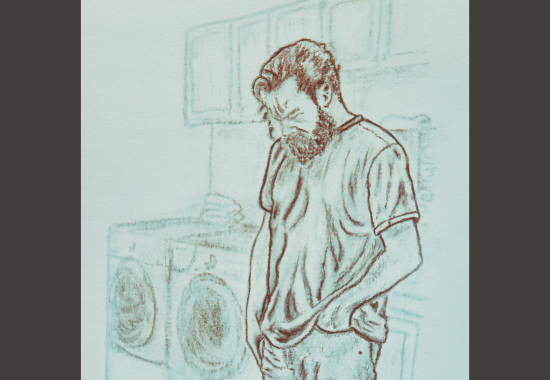
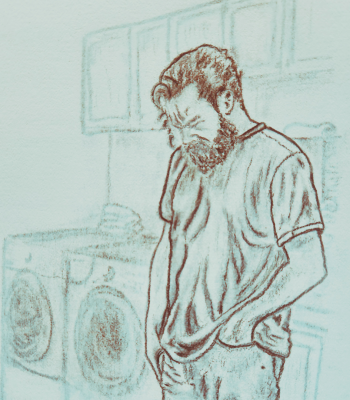
Charcoal drawing of grief stricken man standing next to a washer and dryer

This is how the question Who will do the laundry? feels.

An Overwhelming Question

Who will do the laundry? is an expression of grief concentrated into a plea that really captures the questions, “What is life without them? How do I go on?”. When an autistic person demonstrates grief in this concrete form, a non-autistic person may perceive a lack of empathy. In turn, the autistic mourner may feel that others have no empathy for their despair, depending on their reaction to the overwhelming question. 

My friend’s description of the laundry room scene illustrates his father deeply grieving with echoes of Who will do the laundry? quietly implied. In both cases, it’s not about the laundry. It is about the loss. 

Tammi Morton, Director of Operations


Guest Blog Post: Autism and Assistive Technology

When my son was 4 years old and had no verbal words, I knew we needed to find a communication method that worked for him. Getting over the barriers to access AAC (Augmentative and Alternative Communication) didn’t come fast or easy, but because we were unrelenting in the belief that he had the right to communicate, we are here.  

So where are we? Well, he – and we – are on the second day of the new adventure of middle school. Yes, middle school. A lot has certainly changed since the acronym AT (assistive technology) became part of our vocabulary. My son has matured and grown almost as fast as the technology has.  

Helpful Assistive Technology Resources

  • Proloquo2go has been my son’s go-to communication app for years  It’s fully customizable. He has a dedicated iPad for his communication app and his communication app only.  There are several app options, but this one fit his needs and has grown with him.
  • Snap Type Pro 2 App – to assist with independent work.
  • Clicker App – to promote independent writing.
  • Anti-Glare screen protector to help improve focus.

Text leveling apps modify the text to be simpler to fit a student’s reading/comprehension skills while allowing them to access the same content as other students:

Intermediate Units and Training and Consultation Teams

The information above is courtesy of a report shared with us after a new AT Consult was done with a consultant from our IU (Intermediate Unit) who is a part of the TaC (training and consultation) Team.

You can find your Intermediate Unit by visiting the PA Intermediate Unit (PAIU) website.


Please remember, these are examples that were identified for my son to trial. AT and AAC should be person-centered to meet the needs of each student, and that includes having time to trial options, not just forcing options. Conversations about this should be ongoing, as students and technology change, it’s important to review and revise. Students should also be a part of these conversations.

Technology is so helpful to all of us, I hope this piqued your interest in exploring what is out there.  

Melissa Skiffen, Disability and Family Support Advocate

Achieva