Autism Safety Expo 2025

Autism Connection of PA is excited to announce our upcoming Autism Safety Expo in concert with Jefferson Health’s Center for Autism and Neurodiversity, Philadelphia.  The Expo will unite families, caregivers, professionals, and community members to promote safety awareness related to autism and co-occurring conditions on Friday October 17th from 9-4, and Saturday the 18th from 9-noon at Monroeville Volunteer Fire Company #4, 4370 Northern Pike, Monroeville, PA 15146.   Your participation in this event will help make it an important “one stop shop” for people dealing with disability challenges, who are in need of safety and caregiving supplies, technology, and information!

There is no fee nor registration required for the community.

Sponsor and Event Table opportunities are available. 

Click here for Sponsorship

Click here for Event Table

Email development@autismofpa.org for more information.


Late Diagnosis of Autism Support Group Virtual Meeting

Virtual support group meeting for adults diagnosed on the autism spectrum later in life. This meeting is open to people who believe they are autistic, and don’t know where to turn for help.


Jul 16, 2025 06:30 PM Eastern Time (US and Canada)

Every month on the Third Wednesday

Join Zoom Meeting
https://us06web.zoom.us/j/88320260520?pwd=06OKbNAeEP7kMp3msqrFf5JwWuujID.1

Meeting ID: 883 2026 0520
Passcode: 986602

One tap mobile
+13017158592,,88320260520#,,,,*986602# US (Washington DC)
+13052241968,,88320260520#,,,,*986602# US

Dial by your location
• +1 301 715 8592 US (Washington DC)
• +1 305 224 1968 US
• +1 309 205 3325 US
• +1 312 626 6799 US (Chicago)
• +1 646 558 8656 US (New York)
• +1 646 931 3860 US
• +1 360 209 5623 US
• +1 386 347 5053 US
• +1 507 473 4847 US
• +1 564 217 2000 US
• +1 669 444 9171 US
• +1 689 278 1000 US
• +1 719 359 4580 US
• +1 720 707 2699 US (Denver)
• +1 253 205 0468 US
• +1 253 215 8782 US (Tacoma)
• +1 346 248 7799 US (Houston)

Meeting ID: 883 2026 0520
Passcode: 986602

Find your local number: https://us06web.zoom.us/u/keh80QNK94


Black History Will Forever Be My History – By Joseph Smith, Autism Connection of PA Trustee

This month, we celebrate Black History. It is a time to remember the innovation and accomplishments of trailblazers in the United States. A lot of people are inquiring about why Black History Month is important. Here are some reasons from my point of view. 

  1. All of American history needs to be learned regardless of skin hue. There is too much division in this country. As a result, people of my hue are not getting recognition for the inventions and accomplishments they have made. 
  2. Studying Black History reminds us of the struggles of our ancestors so that we can better understand what we are going through and what they went through. 
  3. It opens us up to more issues that need to be discussed. We live in a critical age where we need to have uncomfortable conversations about race and disability. 
  4. We can make a difference by learning about race in our society. By learning Black History, we can better use Theory of Mind by being more sensitive to the needs of everyone. 
  5. The most important part of all is that Black History can’t be relegated to just one month. There are so many individuals breaking barriers every minute that need to be recognized. 

Black History Month is canonical to American History. By studying Black History, we can obtain knowledge that can prevent us from repeating deleterious events. Together we can break barriers. 

Photo of Joseph Smith

Joseph Smith
Autism Connection of PA Trustee; Giant Eagle employee, and Professional Photographer


Autism Guide for Bathing and Showering

Helping an autistic adult who is struggling with bathing can be a gradual and patient process. Here are some strategies to provide support and encourage personal hygiene:

  1. Understand their sensory needs: Sensory sensitivities can make the bathing experience uncomfortable or overwhelming. Take note of any specific sensory triggers and try to minimize them. For example, they might prefer a certain water temperature or specific bathing products.
  2. Establish a consistent routine: Set up a daily or weekly bathing schedule to create predictability and structure. Routines help them know what to expect, and knowing what to expect can reduce anxiety. 
  3. Visual supports: Use visual schedules or step-by-step picture cards to help them through the bathing process. Visual aids can provide clear instructions and reduce anxiety about what comes next.
  4. Gradual exposure: If the person is anxious about bathing, start with short sessions and gradually increase the duration over time. Offer positive reinforcement and praise for each successful attempt.
  5. Accommodate preferences: If they dislike traditional bathing methods, explore alternatives like sponge baths, using a washcloth, or taking a shower with less water pressure.
  6. Incorporate special interests: Integrate their special interests or favorite activities into the bathing routine to make it more enjoyable. For example, if they love a specific toy or sensory item, allow them to bring it into the bath.
  7. Choice and control: Offer choices within the bathing process. Allow them to choose the soap or shampoo scent, the bathrobe they want to wear afterward, or the time of day they prefer to bathe.
  8. Use social stories: Create social stories or videos that depict the importance of personal hygiene and the benefits of bathing. Social stories can be an effective way to explain new or challenging concepts in a relatable manner.
  9. Create a sensory-friendly bathroom: Make the bathroom a comfortable and calming space. Use soft lighting, add sensory elements like scented candles or essential oils, and provide familiar and preferred towels and bath products.
  10. Modeling and participation: Show the individual that bathing is a regular part of daily life by modeling the behavior. Consider taking baths or showers together initially to provide support and encouragement.
  11. Offer rewards: Consider implementing a simple reward system for successful bathing attempts. This could be earning tokens for each bath, which can later be exchanged for preferred items or activities.
  12. Seek professional support: If the challenges persist, consult with professionals, such as occupational therapists, who specialize in working with individuals with autism. They can provide personalized strategies and support.

More guidance and videos available on Autism Self Care.


Remember, each person is unique, and what works for one may not work for another. Be patient, understanding, and flexible in your approach, and celebrate any progress, no matter how small. Building a trusting and supportive relationship is key to helping the autistic adult feel more comfortable with the bathing process.


Bereft of Coffee

While waiting for the coffee to finish brewing in the office kitchenette, my eyes fixated on the stream of coffee entering the carafe and the tranquil sounds it made in anticipation of the final surge of steam as the brewing finished.  This concentrated focus drowned out a number of elements that flooded the surroundings, flickering lights, multiple distant voices, phones ringing, and the general energy of movement within the maze of cubicles.

During the reverie, I saw a peripheral figure approaching to my left, and a soft, clear voice flowed into my ears, “Good morning! How are you?” and at that moment, I straightened and turned my entire torso toward the person asking the question, stopping like a machine that produced speech. I heard my own voice say, “I am bereft of coffee.” And all memory of the moments following would never gel in my mind because I could only fixate on my social ineptitude.

Bereft of coffee. Who says that? Did you even make eye contact?

Bereft

Bereft is not a word used often in everyday conversation. It’s a complex, haunting word that comes from bereave, a term of loss and mourning that communicates that something is lacking.

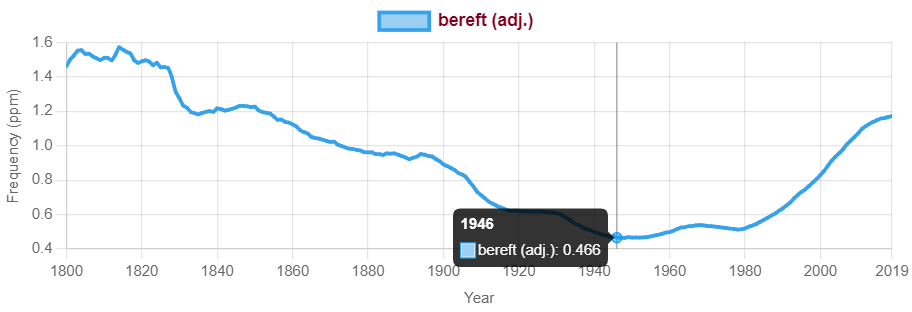
A graph showing the usage of the word bereft over the years with a slight uptick in 2019

Yes. I looked up the use of the word “bereft” over time. It really took a dip in the 1940s and I’ll probably try to find out why.


In the morning kitchenette interaction, the thing that was lacking was coffee, and the choice of the word bereft in this specific case seems a bit dramatic. The word may also communicate on some level that I really want to interact on your terms, but I just don’t know how. It takes a great deal of concentration and sometimes the words just pour out and I wish I could collect them and rearrange them into something, well, “normal.”

The coworker who kindly asked the question was likely to think, “Well, that was an unusual response,” and the moment would vanish along with the multiple mundane things that occur in a nondescript workday. But for me, this common office interaction became a source of shame that lingered for months. This wave of embarrassment was probably unnecessary but it is something that people on the autism spectrum face when they are aware of basic communication differences that can sometimes lead to misunderstanding.

Full Cup

When we have people who truly understand communication differences, we find that they often see these types of interactions insightful, and sometimes endearing. While lamenting to a trusted coworker about my perceived social awkwardness, she said how lovely it was that I was able to express such a deep love for coffee, and in turn, a deep appreciation for words. Bereft is a beautiful word that can express longing for acceptance, and even longing for something comforting, like a cup of coffee.


Identifying Autism in Adults

The autism spectrum is broad, varying features that are sometimes difficult to recognize on the surface. Some adults may have lived their lives without a full awareness that some of the barriers and struggles they have faced are a result of undiagnosed autism. Reports include those who have been stunned by the direct question, “When were you diagnosed with autism?” Other reports specify experiencing difficulty understanding social interactions, difficulty with tolerating textures, changes in routines, and being genuinely dumbfounded by other people’s seemingly insensitive perspectives and behavior. Those reporting range in ages from 20 to 64 years old.

At Autism Connection of PA, Chrisoula manages hundreds of calls, emails, and website contact entries each month. She offers suggestions to adults who want to identify the signs of adult autism, getting diagnosis, and finding support and resources.

-TLM


Identifying Signs of Autism in Adults

While autism is commonly associated with childhood, it is crucial to acknowledge that many people may remain undiagnosed until later in life. Some prevalent signs and characteristics that may indicate autism in adults include:

  1. Social Communication Differences: Difficulty comprehending and utilizing nonverbal cues, challenges in sustaining conversations, and struggles with recognizing and expressing emotions
  2. Sensory Sensitivities: Heightened sensitivity or aversion to specific sounds, sights, textures, tastes, or smells
  3. Special Interests and Routines: Intense focus and extensive knowledge in particular areas of interest, accompanied by a preference for routines and consistency
  4. Executive Functioning Challenges: Difficulties with organization, time management, planning, and flexible thinking
  5. Social Interaction Difficulties: Feeling overwhelmed in social situations, experiencing difficulties in establishing and maintaining friendships, and struggling to grasp social nuances

Pursuing a Diagnosis

If you suspect that you may have autism or exhibit some of the aforementioned signs, it is important to seek a formal diagnosis. Here are the steps you can take:

  1. Educate Yourself: Acquire knowledge about autism in adults and familiarize yourself with the diagnostic process. Learn about common traits and characteristics associated with autism. Weekly e-news covers a range of topics. 
  2. Consult Professionals: Reach out to healthcare providers, psychologists, or diagnosticians who specialize in assessing autism in adults. They can guide you through the evaluation process.
  3. Diagnostic Assessment: The assessment typically involves interviews, questionnaires, and observations to evaluate your social, communication, and behavioral patterns. The goal is to gain a comprehensive understanding of your experiences and determine whether autism is an appropriate diagnosis.

Support and Resources

Following a diagnosis, people with autism can access various forms of support to enhance their well-being and quality of life. Here are some beneficial resources:

  1. Therapy and Counseling: Engage in individual or group therapy sessions with professionals experienced in working with adults on the autism spectrum. Therapy can focus on developing social skills, regulating emotions, and addressing specific challenges.
  2. Skill Development Programs: Seek out programs that offer training in areas such as executive functioning, communication, and social skills, tailored to the specific needs of adults with autism.
  3. Support Groups and Communities: Connect with local or online support groups where you can meet others who share similar experiences. These groups provide opportunities to share insights, receive emotional support, and connect with others on a similar journey. We offer several support groups for you to join!

Recognizing signs of autism in adulthood, pursuing a diagnosis, and accessing support are crucial steps toward understanding oneself and navigating life with autism. By staying informed, seeking professional guidance, and utilizing appropriate resources, autistic people can embark on a path of self-acceptance, growth, and fulfillment. Remember, Autism Connection of Pennsylvania is here to support you every step of the way.

–Chrisoula Perdziola, Resource Specialist

help@autismofpa.org