


Landscape: Lessons Learned
Looking for a way to positively impact an autistic teen or adult in your orbit? Consider hiring them to cut your grass. I’ve done this twice and here is what I have learned so far:
Grass cutting is a social skill.
Grass cutting requires knowing what the boss wants the lawn to look like. My first employee was a man with intense support needs who is non-speaking and always thinking! He loved cutting with a rotary mower – the old fashioned kind your gramma had. That made a kind of grass “confetti” he loved to create and then watch it fly. This means he really liked to cut grass in short, choppy bursts, and his original method made results akin to crop circles.
Did I care? Not really. Did I shape that behavior to straight lines anyway by standing across the lawn and asking him to come toward me? Yes, over time, since maybe he could transfer this skill to another customer. But to be honest, the artist in me loved the crop circles and I kind of miss that lawn art.
Expect an eye for detail.
This same young man learned to “look for it” when prompted – he would look around for the longer patches of grass, and take a run at them. He enjoyed this method and it took advantage of his strong visual system. My second helper might pause as falling maple seed “helicopters” fly by. Those catch his eye for a few seconds. That’s okay. He still gets the job done really well and with a great attitude.

Pay real money, at market rates.
If someone is doing a job for you, it’s only right to pay what someone else would make if the end result is similar or even better! Pay immediately (I am working on this as cash on hand is not something I am used to having). This reinforces the work behavior and is most respectful.
It’s okay to pay in advance.
And teach what an advance means. Sometimes I do this because I only have $20 dollar bills, and our rate is an odd number. But I still want to pay on time so I give and talk about an advance, especially noting that not all bosses do this – I don’t want to set up an unrealistic expectation for his next job. Hold the person accountable to the task owed to you in a timely manner so everyone wins.
Appreciate behavior you may not expect.
My second lawn person laid down on the grass the first time he cut it to eyeball everything, making sure it was even. He looked like a golfer lining up a putt. I said “You are super attentive to detail and that’s admirable.” He didn’t feel the need to check like that after the first time he made sure things turned out right. I did not correct him – he seemed satisfied with that one and only quality assurance check.
Again, win/win.

Point out visual results.
My autistic friends tell me the best jobs are ones where they can visibly see change as a result of their work. Recently I taught my new helper how to manually edge the lawn. Once he got the hang of it, the work went quickly. Then we stood and I pointed out how neat it looked, and once he focused on that, he smiled. The next time he cut the grass, he finished, stopped and looked around at both the edging and the lawn, and said for the first time “Look how great it looks!” It’s possible he missed that in the past and didn’t look at the big picture. Helping people appreciate their own good work is a great practice we all could do more!
Don’t sugar coat things.
If you ask your employee to do something new, you may hear “I don’t want to do that.” Explore what he or she is thinking. That may mean “I’m not confident in that skill” or “I have no idea what you expect,” or “I don’t like it.” Help the person learn the new thing if that’s what you think is going on. And if it’s truly “I don’t like that weed whacking” then it’s okay to say, “Well, I can’t pay you for that part then if I need to do it myself.” Fair is fair, and teaching this early on is respectful.
In the same vein, if something is done poorly, point it out and ask why they think that happened. Maybe they got distracted and missed a spot. Or you may hear something like “Well, it’s been a really long time since I’ve done that,” which may mean, “I don’t remember how” or “I don’t know how and I am too shy to say so.”
Give the person time to explain and see what you as a supervisor can do to help. Autism is in part a communication disorder and sometimes it takes a little detective work to figure things out and that’s okay.
Know what motivates the worker.
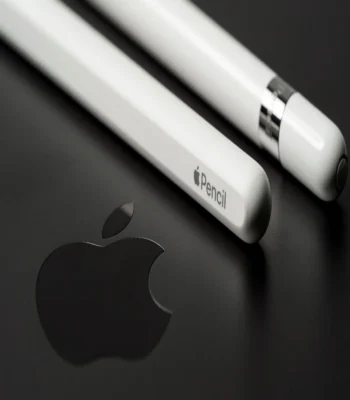
In my current situation, money = Apple products. The request for a very significant raise this season was because this worker wanted a new tablet. I explained that bosses pay a rate for a job regardless of what the employee might want to buy and that a financial goal is not the employer’s concern, but it’s really good to have one. This led to a discussion about fair market rate and about the cost of living increase over last year. So this worker negotiated a raise, just a smaller one than he proposed, and not one based on the latest tablet upgrade he wants. Last night I paid him cash immediately and he exclaimed “THIS IS A NEW APPLE PENCIL!” Tying cash money to a tangible spending goal is a really great skill to see in a young worker! And it honestly reinforces my having cash on hand for him.
Teach about how this job can help get future jobs.
We have had discussions about what other jobs my helper is interested in (restaurant work). We’ve talked about me as a “reference” and discussed how new bosses want to check references. “Are you on time? Do you learn fast? Do you take correction with a positive attitude? Do you finish your work? I would say YES to all those things. That makes me a good reference.” This got a response of “OH!” and now this young man knows a new thing about the hidden curriculum of work.
I learn more every single time it’s lawn cutting day. This current worker decided to leave one third of the job to do today because he likes getting paid twice in one week, it seems. Or maybe yesterday he met his goal of an Apple pencil, and today he is starting over with a new quest. That’s fine with me.
Having his help sometimes feels priceless! I benefit from his positivity and also of course, from the labor I don’t need to do so I can focus on other chores. So I recommend you think about that kid down the block, or a relative perhaps, and consider being their first boss. Who knows, you might kick off an entire career for someone while making your life a little easier in the process.
Opinion: Sorted Children Lead to Sorted Adults
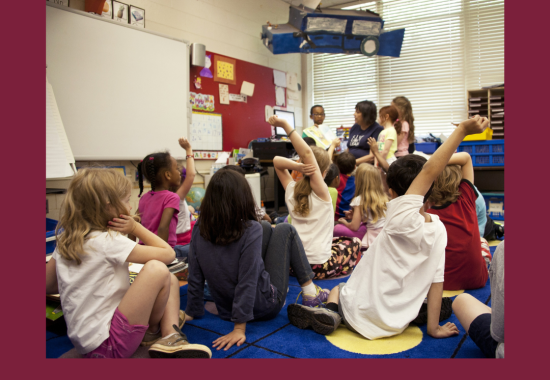
I walk into school on my first day of kindergarten and an adult points me in the direction of my classroom. Whew. Made it! I’m in the “Trauma, Depression, Anxiety, OCD, Autism classroom”. It’s where people like me go to get the support they need. Next door is the “Hearing Impaired Wheelchair User classroom”. Okay, so yes, I’m being over the top. Realistically, when I was in kindergarten 30 years ago, we didn’t talk about mental health and anyone with autism was “taught” in another school or in the basement.
“It is absolutely absurd that we sort people with disabilities. We sort them in school. We sort them at work. We sort them in the community. We wouldn’t do this to people outside of the disability world. So why do we do this to people with disabilities?”
LRE is an initialism that came into my world when we were preparing for my son to begin his school career. LRE stands for Least Restrictive Environment, and it basically means that students with disabilities have the right to be educated with their typically developing peers in general education as much as possible for each student. “Each student” means that each student needs something different to be successful, not each student with an autism diagnosis needs an autism support classroom. I said it. Many students don’t need to be in classrooms with their diagnosis on the wall to be successful.
Let me share an example. My son attended a preschool and was in a classroom where all the students had a diagnosis of autism. He would come home from school twisted in knots from overstimulation. Why? Because much like my son had behaviors (not always negative but certainly loud and many), so did the other students in his room for five hours a day.
First, they were four years old and that’s what four-year-old children do. Second, his wants and needs didn’t always mesh with everyone else’s. My son needed a structure and routine that flew in the face of other students’ necessary structure and routine. With these conflicting needs, the students would implode or explode, and need to recover. It is hard to learn feelings and coping skills when the classroom (the world) is loud.
The knot twisting stopped when he went kindergarten and was in the least restrictive environment (LRE). He started in general education, and attended with 20 other students, with the support of a paraprofessional. Start with inclusion and adjust when a student communicates they need something to be changed.
Oftentimes, what is needed is not a segregated space where all the autistic kids go, it is person-centered support in inclusive, safe spaces where everyone can be themselves to learn, practice coping skills, and build healthy relationships with themselves and others. This applies to all students. They learn from each other, and they have the right to have access and explore learning opportunities within the general education curriculum, including health education. This doesn’t always happen in the segregated settings.
There is only one world we all live in. We should not be modeling for any student that it is a best practice to sort people by a diagnosis.
E.R. Heffel

How to Avoid Medication Mishaps
Carol Miller, RN/BSN, Director of Clinical Services at Achieva and Missy Knox, RN will talk about avoiding medication mishaps.
The presentation will:
- Review questions to ask when starting a new medication
- How to form good medication habits,
- Medication storage, packaging, and disposal options
- How to identify and react to medication emergencies
They will also briefly touch on genetic testing and how this may influence your medications, and there will be time for questions after the presentation.
This is a free virtual workshop, but registration is required. Register here.

Volunteer Appreciation Week 2023
Volunteers! Where would we be without you?
Your contributions of time, energy, and expertise have helped us in so many ways. From organizing events, providing support to families, raising awareness, and fundraising, you have been there for us every step of the way. Your hard work and dedication have enabled us to reach out to more people and provide them with the resources and support they need.
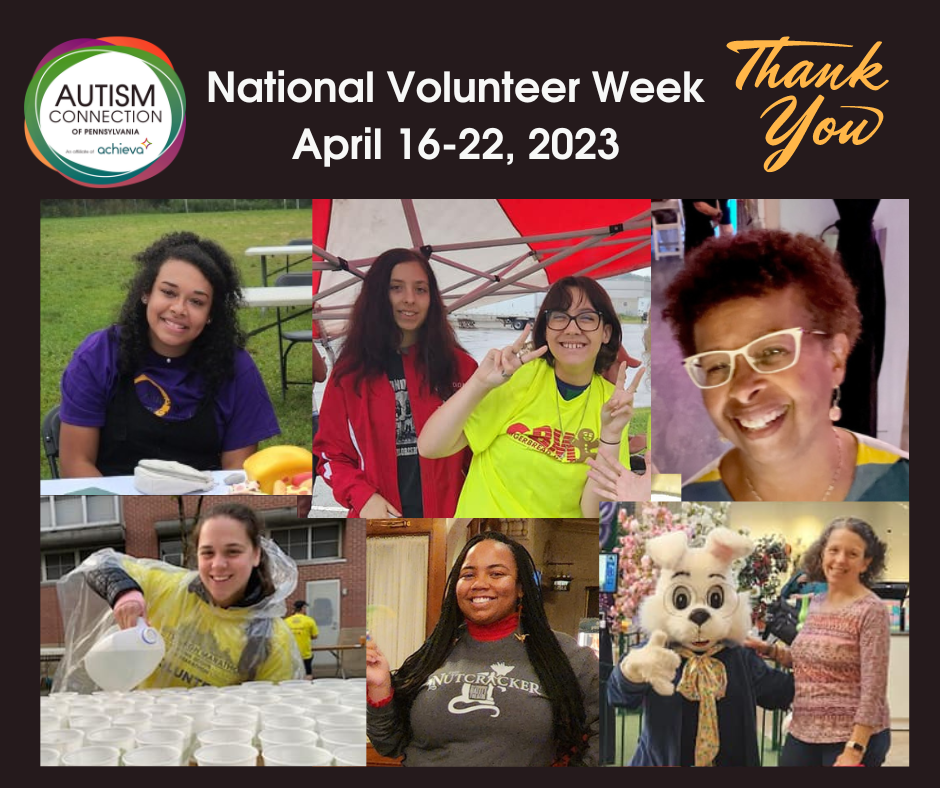
Your generosity and kindness have touched the hearts of many families in our community. Your willingness to lend a helping hand and be a source of comfort and support to those in need is truly remarkable. Your efforts have not gone unnoticed, and we are forever grateful for everything that you do.

Mr. Messado Delivers Sensory-Friendly Magic
On April 2, 2023, Liberty Magic hosted Mr. Messado’s School of Magic’s first sensory-friendly show. This performance was part of a collaboration between Autism Connection of PA, the Pittsburgh Cultural Trust, Liberty Magic, and Mr. Messado himself. His show required minimal changes because he is a natural working with all children.
During the hour long performance, audience members took active roles in the magic tricks, and Mr. Messado seamlessly flowed with participants’ excited responses, and reveled in their joy.
Learn more about Mr. Messado’s School of Magic.
-
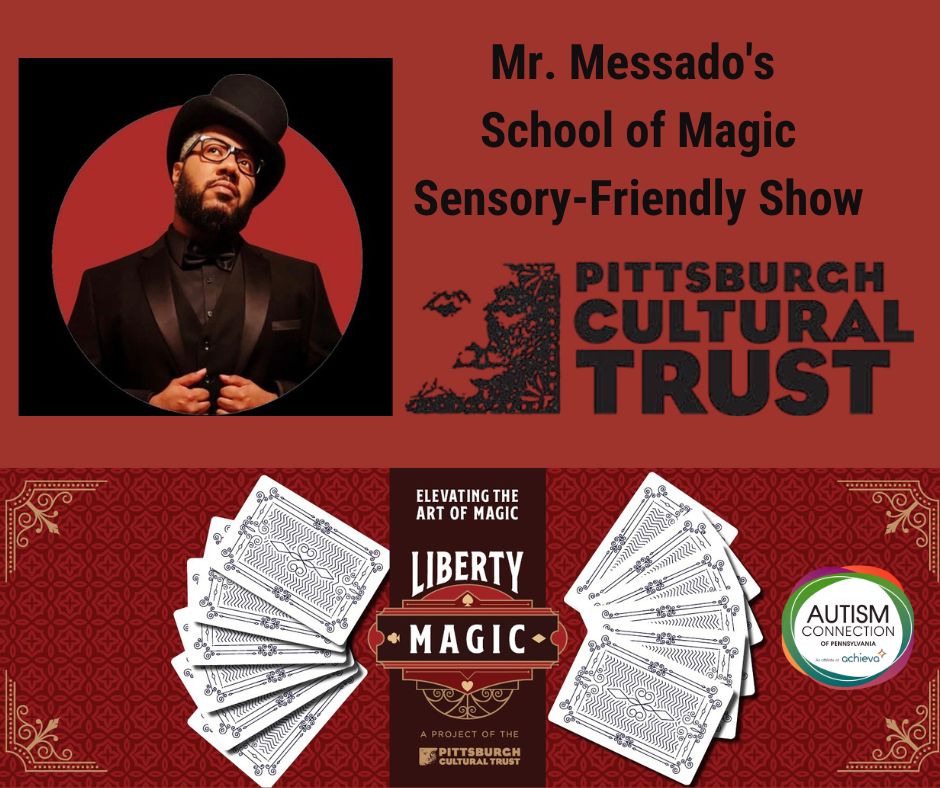
- Mr. Messado’s School of Magic
-
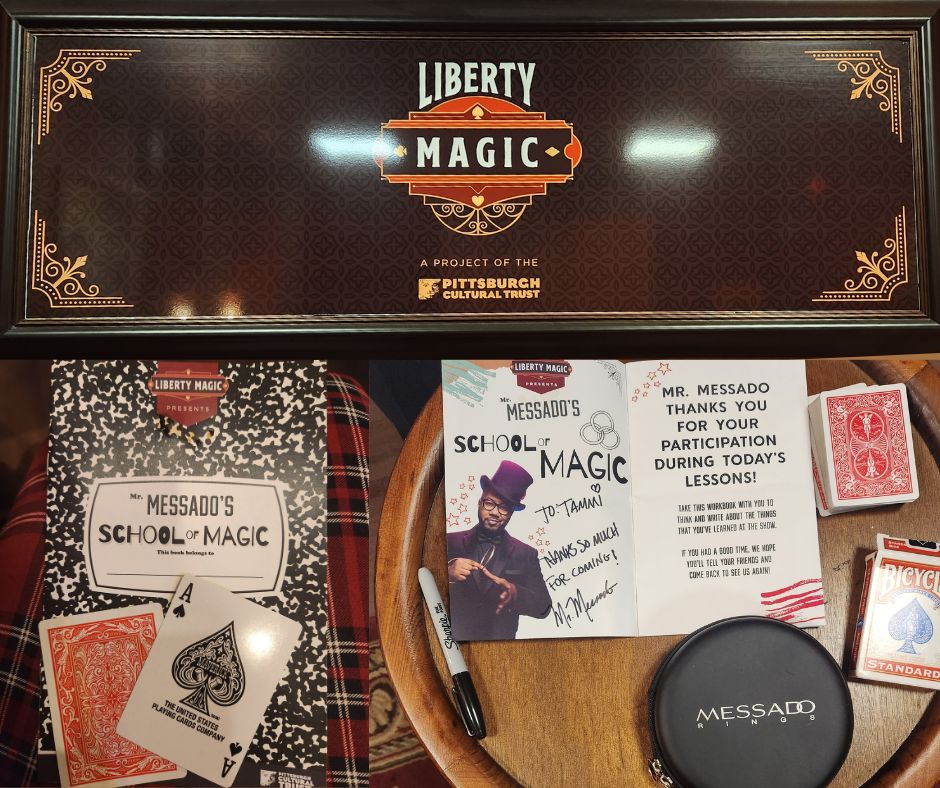
- Liberty Magic Has Magic Swag
-
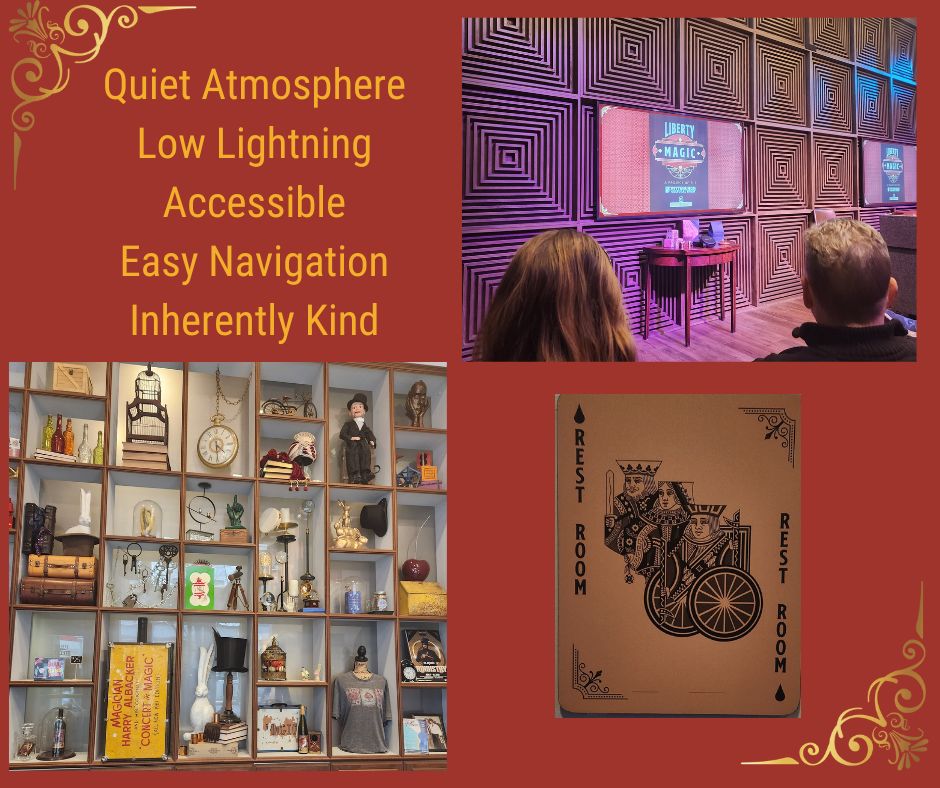
- Creating the Conditions
-
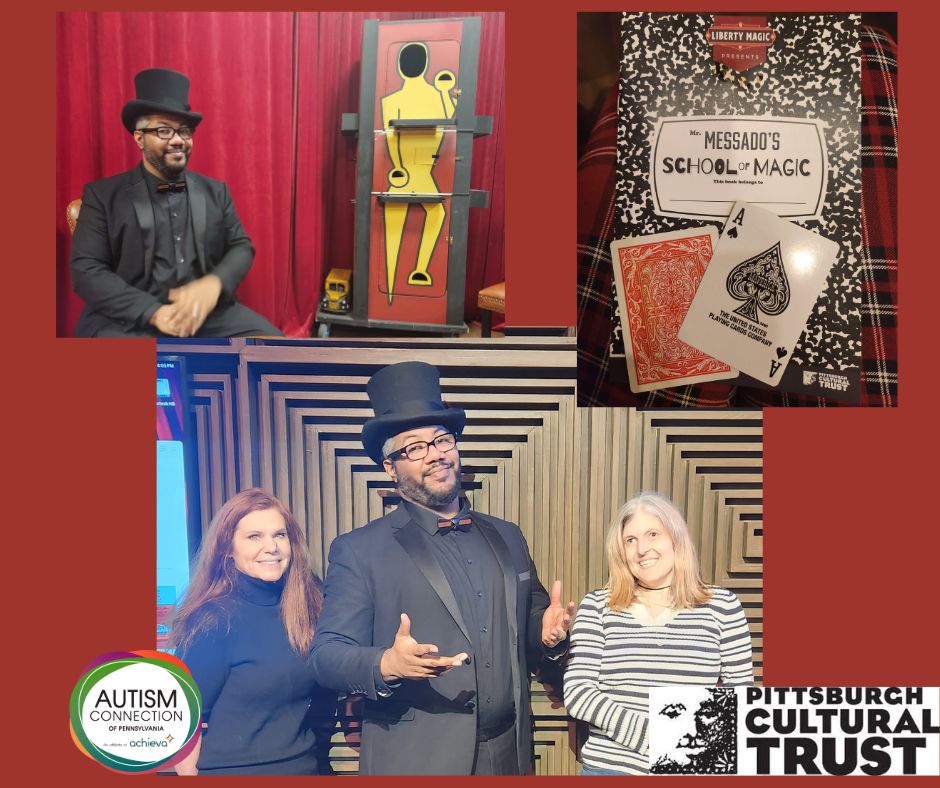
- Autism Connection, Mr. Messado, and The Cultural Trust
-
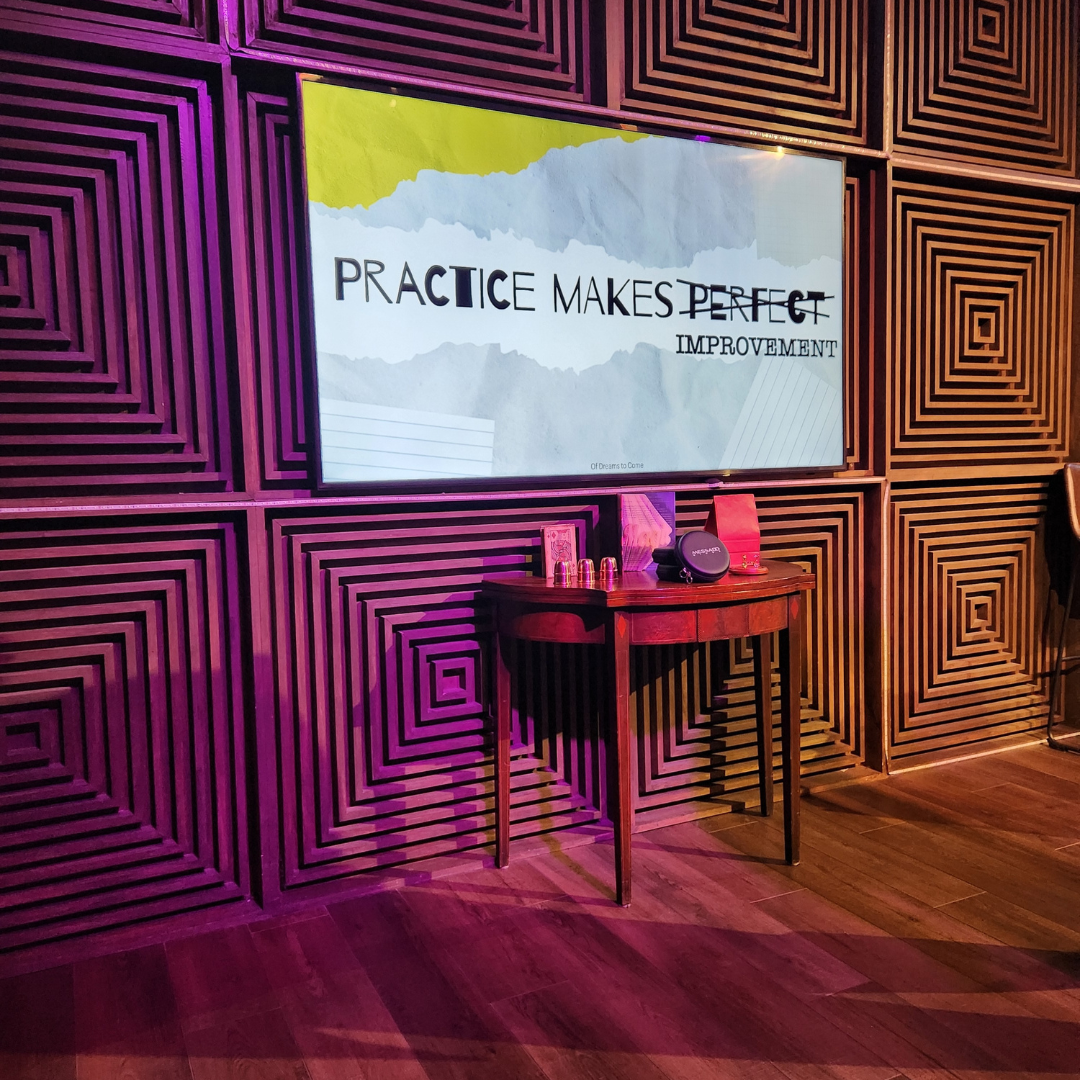
- Practice Makes Improvement
-

- Elevating the Art of Magic

You Can’t Accomplish Just Anything You Want
Thanks to our great support network we were able to do a quick turnaround and prevent the likely loss of a career for someone who recently reached out to us for help. We were so grateful for all the forces that combined and allowed us to be our mission of “a lifeline of support.”
M. had been “in love” with a young person they met over ten years ago. While they never had an in-person dating relationship, a heart was captured and imagination took over. Sending poems, emails, texts, flowers, candy, and more, can be lovely gestures when welcomed, but wound up being scary and threatening to the love interest who did not welcome them. Finally, a protective order was filed in an out of state court. The first order covered 24 hours, the second, two weeks, and three business days following our first call with the accused, the court would hear and see evidence to produce a two-year Protective Order which would have cost our new client their job.
Hearing someone so distraught, tearful, hopeless, and being baffled by this turn of events kicked us into high gear. This college educated professional was stuck in emotions and had no idea what to do, nor if they needed to appear in court despite simple court paperwork clearly stating they needed to attend in person. There was no plan, no lawyer, no defense strategy, and only three days plus a weekend to work with. Fortunately, this person immediately reached out to and signed up with both referrals we provided, one being a defense attorney licensed in the state of the proceedings, and the other, a therapist who provides services for those in the justice system. We owe a debt of gratitude to board trustee Tiffany Sizemore who provided the out of state referral, and to Shawn McGill who immediately took the call and offered his professional help.
The judge heard both sides of the case in great detail on the day of proceedings, taking autism into consideration but not focusing on it. And much to the surprise of most involved, including the defendant’s attorney, the judge did not place our client under a Protective Order because he did not hear criminal intent nor malice, and believed the testimony that they were moving on permanently and would never contact the plaintiff again.
We talked that night after it was all over, and I asked a question I have often thought about. “What rules did you follow that you learned growing up as a kid that may have led to trouble in this situation?” And right off the bat the answer was “Follow your heart. And if you work hard enough, you can achieve anything!”
Now, that last one is not true for any one of us! And while we routinely use phrases like these, they can lead some to overly apply them very literally and not know when to change course. Positivity is sometimes helpful but it can become toxic. So please consider the individual when you use encouraging words. We were lucky in timing and that we know the best network of helpers, but this was such a close brush with disaster that the client wanted us to teach with this story. In their own words spoken the night after things cleared up, “I just want to give presents to everybody who helped me. And I am a first grader in terms of dating – I was in love with a mirage! I ‘m definitely going to do the counseling too. But overall I want to tell this story and help make sure this never happens to anyone else, ever again!”