Language Matters: Why Disability Slurs Hurt—and What We Can Do About It

Until we recognize that autistic people and people with disabilities are valuable, capable human beings, we will continue to lose words that were originally meant simply to describe a demographic. Over time, everyday language gets twisted, misused, and weaponized—turning descriptive terms into insults. When that happens, the people connected to those words become targets too.

This cycle harms more than vocabulary. It harms people.

When Words Become Weapons

Many disability-related terms began as neutral descriptions. But because our society has long underestimated, excluded, or stigmatized people with disabilities, those words often slid into the realm of slurs. We see this most clearly with the R-word—once a clinical descriptor, now a widely recognized insult.

The problem isn’t the word itself.
The problem is how our culture has treated the people behind it.

If a group is not respected, their label becomes a punchline.
If a group is devalued, their identity becomes shorthand for “lesser than.”

Autistic people and families tell us that the impact is anything but harmless.

The Real Impact on Autistic People and Families

A parent recently shared with us:

“The slur-hurling is making us (autistic people and their families) feel like we’re ‘lesser than’. We’re not seen as deserving of services or help by the general public if we’re seen as a punchline. Or worse, we’re invisible because everyone is trying to make autism look like it’s less severe than what it is. Language does matter.”

This is the lived experience behind the jokes, memes, and “I didn’t mean it that way” excuses.

Slurs do more than sting. They influence whether someone is seen as deserving of support, empathy, or even basic dignity. They shape how teachers respond, how communities include, how neighbors interact, and how policymakers prioritize services.

When people become jokes, they also become invisible.

Minimizing Autism Doesn’t Help Anyone

There’s a growing cultural tendency to soften or minimize the challenges many autistic people face. While positive stories and strengths-based perspectives are important, they cannot erase the need for support, services, and understanding—especially for those with high support needs.

When autism is treated like a quirky personality trait rather than a legitimate disability, families may encounter disbelief, judgment, or outright dismissal.

And when slurs are used casually, it reinforces the idea that autism, intellectual disability, or developmental differences are inherently negative. Or worse, something to mock.

Respect Starts With Language

Changing the way we speak is not about being “overly sensitive” or enforcing “political correctness.” It is about recognizing the full humanity of autistic people and people with disabilities.

Words can:

  • reinforce stigma

  • block access to support

  • shape public attitudes

  • affect policy decisions

  • influence how people treat one another

Respectful language creates safer and more inclusive spaces. It signals that people with disabilities are real, valued members of our communities, not punchlines, burdens, or stereotypes.

What We Can Do

Everyone plays a role in reducing harm and building a more inclusive culture. Here’s where we can start:

1. Retire disability slurs—including the R-word—completely.
Even “as a joke,” they reinforce harmful beliefs.

2. Speak up when you hear others use them.
A simple “That word hurts people. Could we choose something else?” can make a difference.

3. Learn from disabled voices.
Autistic people and their families are telling us what they need. Listening is the first step.

4. Use language that reflects dignity.
People-first or identity-first language is always better than a slur.

5. Model respect in everyday conversation.
Kids, coworkers, and community members learn from what we say.

A Community Built on Respect

Autistic people and families deserve to be seen, heard, and valued. When we change our language, we help change our culture—and we make space for understanding instead of mockery, connection instead of stigma.

Language does matter.
And so do the people behind it.

If you or your family need support, Autism Connection of Pennsylvania is here to help.

Editorial: Wings and Things

Note:  I am a slow processor, especially around trauma, in large part because I have PTSD from witnessing one murder, seeing news coverage of two friends’ murders, and being assaulted with the threat of being killed — all random stranger crimes. Lots of people have PTSD for lots of reasons – it’s not just for veterans! I didn’t know that for over 30 years and I credit my friend Kris Veenis and his amazing documentary for waking me up to my own hidden disability.  Denial is a powerful thing and I am glad some of mine melted away.

Trauma etches into our nervous systems and can be a lasting medical issue in those of us genetically wired to respond in a lingering fight or flight response, triggered by random linked details, or more-obviously disturbing events. I wrote the post below about the predatory murders in Buffalo and in the process of sleeping on it, other tragedies occurred in California and Texas, because our society is broken and I am in delay mode because none of us have the luxury of time, nor the benefit of actual healing things we need in order to process it all.

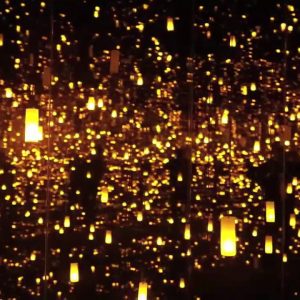
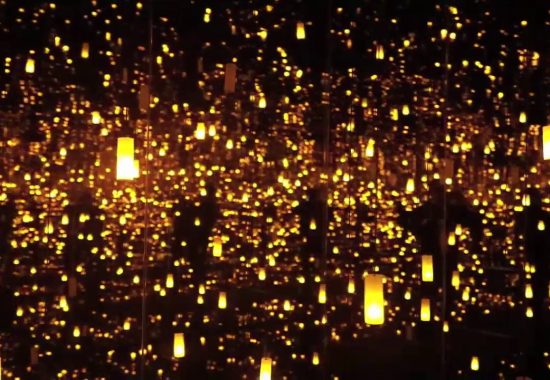
golden flickering lights that seem to extend into an endless black voic

Yayoi Kusama, “Aftermath of Obliteration of Eternity”

This Editorial is from last week but it’s still true today:

Our mission is to be a lifeline and hub for families and adults, providing support, information, and advocacy. 

Why do we care more about some issues than others?  Why do I feel more impacted by the latest (but not last) mass shooting, this one targeting people of color, in a city I lived, worked, played, and learned in, versus one that happened somewhere else?

I lived in Buffalo for four years of college plus summers – it was a great, freeing, artsy place where I could ride my bike over the Peace Bridge to Canada, following Niagara River Boulevard where I would pedal all the way up past a convent where the women wore brown, birdlike head pieces, ala the Flying Nun (a 1960’s reference, you can Google it). I just learned those are called “cornettes.”  It was a nice adventure.

Living a block or two from the Albright Knox Art Gallery gave me access to a great summer job and internship where I met some of my first kids with autism who tread into the mirrored cube in socks covering tentative feet, stepping into a visual infinity where some just could not enter the room.  I had a lot to learn about the brain and their visual perception – and they were my first teachers.

Buffalo is where I also did an internship at St. Mary’s School for the Deaf where kids were kids and when in trouble, they’d squeeze their eyes shut tight so they couldn’t see me sign “Slow down! Stop running!  Calm!”  Then they would rapidly sign to each other secretly, beneath the lunch table I was monitoring, so I couldn’t see their complaints about me. Authority figures are no fun sometimes!

That’s where I took a bus from the West Side at Buff State (white neighborhoods where people looked like me) to the East side (black neighborhoods) where St. Mary’s was located, and I was the only white person on the bus after the transfer.  That bus is where I got to feel, for about one hour a week, what it was like to be the only person in the “room” who looked different, literally standing out because there was only room to stand when I’d get on. I was an “other.”

I carry this experiential gift with me, one that taught the briefest lesson of empathy for people who experience being the “Only One” in the room every single day, based on how much melanin is in their skin and how white the room is. Feeling like a stranger, and then eventually acting kind of invisible (my choice and my reaction, not the choice for everyone).  Not fitting in and yet knowing this was a split-second snapshot relative to those living their entire life being “othered”, realizing I could step off that bus at home and re-absorb myself in an environment where I looked like the majority any time I wanted to – the very easy way out.

Things that are painful or scary or tragic seem to matter more when they happen to us – that’s just human nature.  Some people assume that if we care about a cause – say, skin cancer or autism or racial justice – we must have personal lived experience with that issue. It’s always surprising to me – although by now it should not be – to have people assume at least one of my sons (even all my sons) are autistic, based on my vocation.

They are not.

My youngest googled himself one day and found a photo of him and his brothers with me and their dad at a charity restaurant event – labeling all the boys at the time as autistic.  “I wonder what else mom isn’t telling us!” he thought.

Why does Autism Connection work with, and on behalf of, ourselves and people with specific disabilities?  How can we successfully move beyond our original mission to care and take action, alongside and for all who are oppressed, misunderstood, stereotyped and marginalized, beyond those who may live in our house or occupy part of our hearts as friends or family members?

How can we expect others to stand up for people in the autism community, at risk or seen as “less than”, unless we are willing to stand up for all vulnerable people, especially those terrorized by hate and violence?

Let’s share our strength and advocacy experience with anyone in need – especially if we are in the majority – and live out the words “justice for all.”  Contact me to talk or write back and forth about how you may want to explore this idea, if it’s new to you.  We get immersed in our own concerns because immersion is survival – but diversity brings strength to all things in nature, and we humans need all the shared help we can provide to each other.

Lu Randall